
Raspberry Juice Recipe for Homemade Refreshment in Summer and Winter
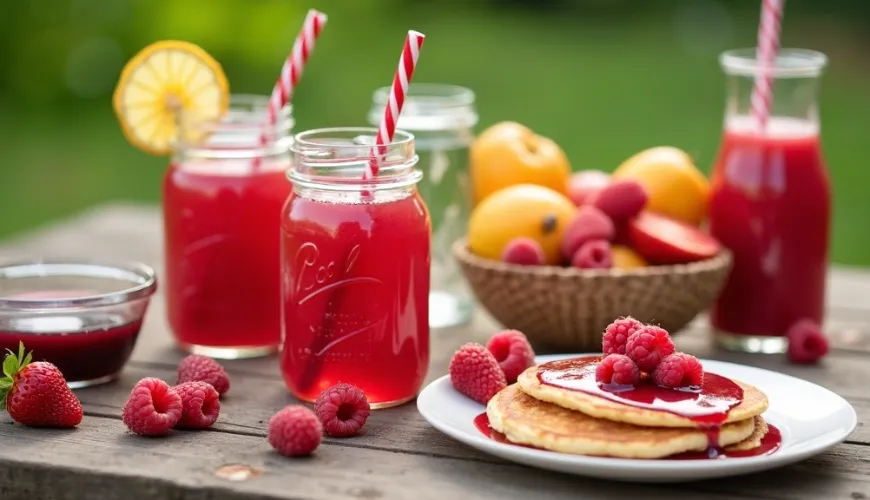
Raspberry Juice - A Homemade Summer Treasure that Tastes Great and Heals
In a world where supermarket shelves overflow with drinks featuring lengthy ingredient lists and unfamiliar "E-numbers," more and more people are asking the question: Where can I find something real, healthy, and delicious? The answer may be simpler than it seems – homemade raspberry juice. It's not just a refreshing drink for hot days but also a way to preserve the summer taste of raspberries all year round. Whether prepared cold or by cooking, raspberry juice is more than just a sweet beverage – it's a return to tradition, to our roots, and to our grandmothers' kitchens.
Why Raspberries?
Raspberries are not just a juicy fruit that brightens every bowl. They are true nutritional stars. They contain high amounts of vitamin C, fiber, and antioxidants, especially anthocyanins, which give raspberries their characteristic deep red color. These substances help the body fight inflammation, support heart health, and even contribute to the prevention of certain types of cancer.
Try our natural products


Additionally, raspberries have a low glycemic index, making them suitable for diabetics or those monitoring their sugar intake. And what's more – their taste is so exceptional that they don't require much modification to create a truly delicious and healthy drink.
Raspberry Juice – Cold-Pressed or Cooked?
When making homemade raspberry juice, there are two basic methods: cold-pressed and cooked raspberry juice. Each has its advantages, specific taste, and uses. The choice between them depends not only on flavor but also on how long we want to preserve the juice, how much time we have, or whether we prefer a more pronounced or milder flavor profile.
Cold-Pressed Raspberry Juice - Minimum Intervention, Maximum Flavor
This method is ideal for those who want to preserve as much of the vitamins and natural raspberry flavor as possible. The recipe for cold-pressed raspberry juice is simple and requires no special equipment.
Simply crush fresh raspberries, let them sit for a few hours (or overnight) in the fridge with a bit of sugar or honey, and then strain through a fine sieve or cloth. The result is the pure essence of summer, which can be consumed on its own, diluted with water, or added to cocktails, smoothies, or yogurts.
However, this juice is best suited for quick consumption as it hasn't been pasteurized and thus spoils faster. If you want to keep it longer, you can freeze it in smaller portions – perhaps as ice cubes that will later refresh a glass of water on a hot day.
Cooked Raspberry Juice - A Tradition That Endures
On the other hand, cooked raspberry juice is a classic that our grandmothers knew well. Raspberries are boiled with water and sugar, then the mixture is strained, and the juice is canned. This method allows for long-term storage without preservatives, even outside the refrigerator.
Moreover, during cooking, the flavor is slightly intensified – the juice becomes richer, sweeter, and is suitable not only for drinking but also as a base for homemade syrups, dessert sauces, or as a topping for pancakes or ice cream.
A popular home trick is to add a few mint leaves, a few drops of lemon juice, or a piece of cinnamon during cooking for a more interesting aroma. Cooked raspberry juice thus offers a wide culinary use and can last on the shelf for several months.
The Story of One Garden
On a small farm in the Vysočina region, Mrs. Zdeňka and her husband have been growing raspberries for over twenty years. Every summer, they harvest dozens of kilograms of this fragrant fruit, and a large part of it ends up as homemade raspberry juice. "I make both versions – cold and cooked. The cold one for the kids because they like it fresh and sweeter, and I save the cooked one for winter. In January, when it's freezing outside, I open a jar, and suddenly it's July again," she laughs.
Her juices contain no additives or citric acid. Instead, she uses only lemon juice and honey from her own beehive. "It's not hard. It just takes a little time and the willingness to get started. And the result is worth it," she adds.
How to Do It? Basic Recipes for Homemade Raspberry Juice
Cold-Pressed Raspberry Juice
- 1 kg fresh raspberries
- 250 g cane sugar or 200 ml honey
- Juice of 1 lemon
Crush the raspberries in a bowl, add sugar or honey and lemon juice. Mix, cover, and let sit in the fridge for at least 6–8 hours (preferably overnight). Then strain the mixture through a fine sieve or cloth and pour into clean bottles. Store in the fridge and consume within a week or freeze.
Cooked Raspberry Juice
- 1 kg raspberries
- 500 ml water
- 400–500 g sugar (to taste)
- Juice of 1 lemon
Slowly bring raspberries with water to a boil and cook for 10–15 minutes. Press the mixture through a sieve or cloth, bring to a boil again, add sugar and lemon juice. Pour hot into sterilized jars. Seal and invert or pasteurize for 10 minutes at 80°C. Store in a cool, dark place.
Raspberry Juice as Part of Modern Life
While homemade food production used to be a necessity, today people return to it voluntarily. Slow food, local ingredients, and a return to roots are not just trends but also a response to the abundance of industrially processed products. In this context, raspberry juice becomes a symbol – a simple but deeply personal gesture of caring for oneself and one's surroundings.
It's not just about a tasty drink. It's also about time spent with family harvesting raspberries, the scent of summer that fills the kitchen during cooking, and the joy of a homemade gift. In a time when we seek ways to slow down and reconnect with nature and ourselves, a glass of homemade raspberry juice can be an unexpected but effective ally.
As writer Wendell Berry said: "Food is not just fuel. It is a gift of life, a story we tell about ourselves, our culture, our planet." And that story can begin right at the raspberry bush at the end of your garden.