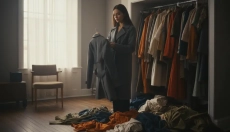

Dress smart with thrift stores and swaps
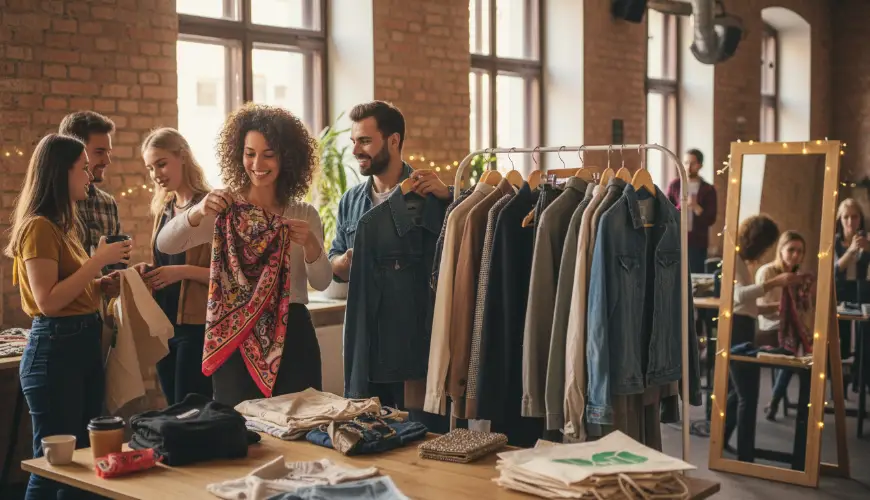
Just a few years ago, secondhand stores were considered places where only those who couldn't afford anything else went to shop. Today, however, the situation has turned almost one hundred and eighty degrees. Secondhand shops are bursting at the seams, swap events are held in cafés, galleries, and school courtyards, and more and more people openly admit that the most beautiful piece in their wardrobe comes from secondhand. It's not just a fashion wave – it's a transformation in the way we think about clothing, money, and responsibility toward the planet.
According to a 2024 report by ThredUp, the global secondhand clothing market is growing three times faster than conventional fashion retail. And Czechia is certainly not falling behind in this trend. Just take a walk through any larger city and count the secondhand shops – in Brno, Prague, or Ostrava, you'll find dozens of them, often on the busiest streets. On top of that, online platforms like Vinted are growing, where Czechs exchange hundreds of thousands of clothing items monthly. What's behind all of this, and how can you get the most out of it for your own wardrobe without having to sacrifice style?
Why secondhand and swap have become a smart choice
There are several reasons, and they intertwine with each other. The most visible one is the financial aspect. A quality wool coat that originally cost five thousand crowns in a store can be picked up at a secondhand shop for a fraction of the price – often for three hundred, five hundred crowns. Brand-name jeans, silk scarves, leather shoes – all of these regularly appear in secondhand shops in condition that would surprise many. Many items have been worn once or twice, and some even still have their tags. People simply buy more than they have time to wear, and what they don't need moves on.
Then there's the environmental dimension, which has been resonating more and more strongly in recent years. The fashion industry is among the planet's biggest polluters – according to data from the European Environment Agency, textile production consumes enormous amounts of water, energy, and chemicals, and it's estimated that less than one percent of clothing material is actually recycled back into new garments. Every piece that gets a second life instead of ending up in a landfill is a small but real step in the right direction. And when a million of those small steps come together, the result is no longer so small.
The third, and perhaps most surprising reason, is originality. In an era when fast fashion produces millions of identical pieces and you can spot three of the same jacket on the street in a single afternoon, secondhand offers something rare – uniqueness. Vintage dresses from the seventies, retro blazers with wide lapels, hand-knitted sweaters that no machine can produce today. This is exactly where distinctive personal style is born – one that can't be bought in any chain store.
Swap events, meaning organized clothing exchanges, add yet another advantage to all of these benefits – a community dimension. Imagine a room full of people who brought things they no longer wear and leave with something that brings them joy without ever pulling out their wallet. A swap works on a simple principle: you bring a piece, you take a piece. Some events use a point system, others are completely open. In both cases, it's about an atmosphere of sharing that turns shopping into a social experience.
One of the organizers of regular swaps in Brno, Tereza, described her experience in words that capture the essence of the entire movement: "I started swapping because I didn't have money for new clothes. Today I could afford to buy them, but why would I? My wardrobe is full of items with stories that I enjoy more than anything from a store." It's precisely stories like these that show that sustainable fashion isn't about deprivation, but about a different way of thinking.
Try our natural products
How to build a wardrobe smartly, affordably, and sustainably
Building a wardrobe through secondhand and swap requires a slightly different approach than regular shopping. It's not about walking into a store with a specific list and leaving in twenty minutes. It's more like treasure hunting – it requires patience, an open mind, and a few practical principles that make the whole process easier.
Knowing your own style is absolutely key. Before even stepping into a secondhand shop, it pays to think about what you actually wear. Not what you'd like to wear in your fantasies, but what you realistically put on day after day. It helps to go through your wardrobe and look at which pieces you reach for most often and why. Are they simple cuts? Certain colors? Specific materials? This awareness then works as a filter that prevents you from giving in to the temptation of buying beautiful but impractical clothes in a secondhand shop that then hang on a hanger for a year.
Another practical step is focusing on material quality. In secondhand shops, you can learn to recognize quality fabrics much faster than anywhere else, because you see how different materials behave after months or years of wear. A synthetic polyester t-shirt for fifty crowns from a fast fashion chain looks tired after three washes, while a cotton or linen t-shirt from a quality brand holds its shape and color even after dozens of washing machine cycles. In a secondhand shop, you can tell this at first glance – and at first touch. That's precisely why experienced secondhand shoppers often say they've learned to recognize quality better than anyone who only shops in regular stores.
When it comes to sizes, it's good to be flexible. Size labeling differs not only between brands but also between decades – a size 38 from the nineties might correspond to today's 36. That's why trying things on is the most reliable approach, and if you're shopping online, knowing your exact body measurements is essential. A measuring tape is a better friend in this case than any size chart.
When it comes to swap events, it's proven best to bring your best, not your worst. A common mistake is that people bring items to a swap that they themselves wouldn't want – faded, damaged, unfashionable pieces that won't excite anyone. The principle is simple: offer what you'd want to find. A clean, nicely folded sweater in good condition has a much better chance of finding a new owner than a crumpled shirt with a missing button. And it works the other way around too – at a well-organized swap where everyone brings quality pieces, everyone leaves satisfied.
For those just starting out, it can be useful to build a so-called capsule wardrobe – that is, a limited number of mutually combinable pieces that together create dozens of different outfits. The classic foundation typically includes quality jeans, a simple t-shirt in a neutral color, a well-fitting blazer, versatile dress, and comfortable yet elegant shoes. All of these items appear regularly in secondhand shops, often in perfect condition. A capsule wardrobe also has the advantage of forcing you to think about every piece you include, which naturally limits impulse purchases.
Incidentally, impulse buying is a trap you can fall into even at secondhand shops. Low prices tempt you to buy "everything that's nice," and the result is an overstuffed wardrobe full of things you don't wear – exactly the problem you were trying to escape. The golden rule is: if you can't imagine at least three outfits that the new piece would fit into, leave it be. Someone else will appreciate it more.
Online secondhand is a chapter of its own, one that has been booming in recent years. Platforms like Vinted or Depop have made secondhand shopping accessible even to people who don't have a secondhand shop around the corner or don't have time to browse through racks. The advantage is the enormous selection and the ability to search for specific brands or pieces. The disadvantage is the inability to try things on and occasionally misleading photos. Experienced online shoppers therefore recommend always requesting exact measurements, asking about the condition of the clothing, and not being afraid to communicate with the seller.
An interesting trend also worth mentioning is upcycling – the creative transformation of old clothing into something new. Old men's shirts are turned into summer dresses, several t-shirts become an original patchwork bag, and cut-off jeans become summer shorts. Upcycling takes the idea of a sustainable wardrobe one step further, because it gives purpose even to pieces that would otherwise end up in a textile recycling bin. And you don't need to be a professional seamstress to do it – there are thousands of tutorials on YouTube and Instagram for complete beginners.
As British designer Vivienne Westwood, one of the first vocal advocates of sustainable fashion, remarked: "Buy less, choose well, and make it last." This sentence sums up the entire philosophy of a smart wardrobe in six words. It's not about having a lot – it's about having well.
When we think about it, building a wardrobe through secondhand and swap isn't really anything revolutionary. Our grandmothers and great-grandmothers did it for generations – clothing was inherited, altered, exchanged, and repaired. It's only in recent decades that we've grown accustomed to the idea that clothing is a disposable affair that we throw away after a season and buy new. The return to secondhand and swapping is, in a sense, a return to common sense. The only difference is that today we have the internet, online platforms, and communities at our disposal that make the whole process more convenient and more fun than ever before.
Once you discover the joy of finding the perfect piece in a secondhand shop – that coat that fits like a glove, those shoes you dreamed of but couldn't afford in a store – you return to regular shopping only reluctantly. And perhaps that's precisely where the greatest power of the entire movement lies: it's not about a sense of duty or sacrifice, but about the authentic joy of smart and meaningful dressing that's kind to both your wallet and the planet.