

Discover the benefits of uphill walking for your body
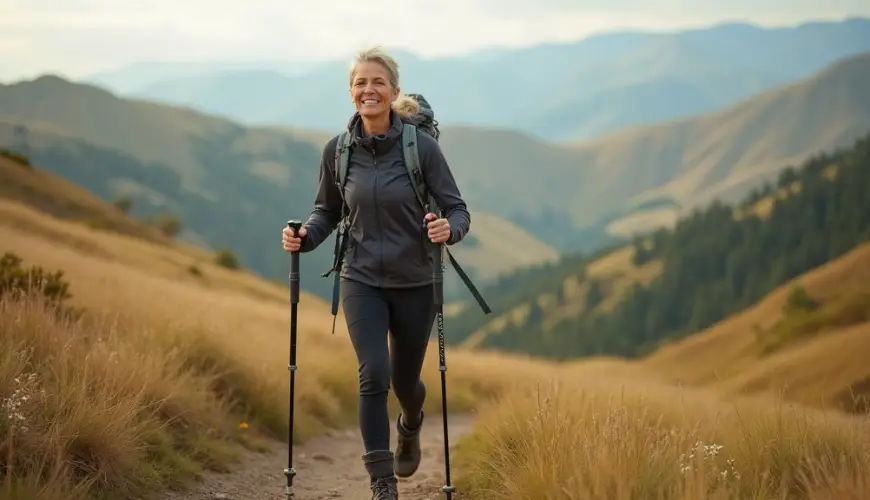
Few people realize, while strolling through a park or taking a trip into nature, that one of the simplest yet most effective ways to strengthen the entire body lies right beneath their feet – all you need to do is head uphill. Walking on flat ground is great, no question about it. But as soon as the terrain starts to rise, the body suddenly works in a completely different way. Muscles engage more intensely, the heart beats faster, and calories are burned at a pace that would surprise many. And yet this is no extreme sport, nor an activity requiring special equipment. All you need is comfortable shoes, a bit of a hill, and the desire to do something for your health.
Interestingly, uphill walking was a completely natural part of human life for centuries. Our ancestors moved through hilly terrain daily without thinking of it as exercise. Today, when we spend most of the day sitting and walking on flat sidewalks, it has become an almost forgotten physical activity. And yet scientific studies repeatedly confirm that precisely this more demanding walking on uneven terrain delivers health benefits that an ordinary walk on flat ground simply cannot offer.
Try our natural products






Why it's good to walk uphill
When a person heads into an incline, their body immediately responds by increasing heart rate. And this is where the magic begins. The heart is a muscle, and like any other muscle, it needs training to stay strong and healthy. According to the American Heart Association, adults need just 150 minutes of moderate-intensity aerobic activity per week to significantly reduce the risk of cardiovascular disease. Uphill walking falls precisely into the category of moderate to vigorous exercise, so those 150 minutes can be fulfilled much more efficiently than with walking on flat ground.
But it's not just about the heart. When climbing, the muscles of the lower limbs engage significantly more – calves, thigh muscles, glutes, and muscles around the ankles. The body has to overcome gravity, which means every step requires greater muscular strength than on a flat surface. The result is a gradual strengthening of the entire muscular apparatus of the lower half of the body, without the need to visit a gym. This is precisely why orthopedists and physiotherapists often recommend walking up a gentle hill as one of the most natural forms of strengthening that is gentle on the joints and at the same time extraordinarily effective.
An often overlooked advantage of uphill walking is its effect on metabolism. A study published in the journal Medicine & Science in Sports & Exercise showed that walking on a slope of just 5% increases energy expenditure by approximately 50% compared to walking on flat ground. On steeper inclines, the difference can be even more dramatic. This means that a half-hour walk uphill can burn the same amount of calories as nearly an hour-long walk on flat terrain. For those who want to lose weight or maintain a healthy weight, this is crucial information – especially in a time when time is precious and every minute of movement counts.
Let's imagine a specific situation. Mrs. Jana, a fifty-year-old teacher from a small town in the Vysočina region, started regularly walking up the hill above her house two years ago. No marathon, no extreme feats – she simply went out three times a week along the path leading to the hill beyond the town, which took her about 40 minutes round trip. After three months, she noticed that her breathlessness when climbing stairs at work had disappeared. After six months, her doctor noted an improvement in her blood pressure at a check-up. And after a year? She felt more energetic than she had at thirty-five. No miracle supplements, no expensive fitness center. Just a hill, comfortable shoes, and consistency.
This story is not an isolated one. People around the world describe similar experiences, and the scientific literature is full of evidence that regular walking in hilly terrain improves not only physical fitness but also mental health. Movement in nature, especially the kind that requires a bit of effort, stimulates the production of endorphins and reduces levels of cortisol – the stress hormone. As the Greek physician Hippocrates said more than two thousand years ago: "Walking is the best medicine for man." And if we add a hill to that walk, the effect multiplies.
The question of bone health should not be left aside either. With advancing age, a natural loss of bone mass occurs, which can lead to osteoporosis. Weight-bearing activities, among which uphill walking undoubtedly belongs, help slow this process. Bones respond to mechanical stress by becoming stronger – it's a similar principle to muscles. The more we load them with appropriate stress, the stronger they remain. The World Health Organization therefore ranks terrain walking among recommended activities for the prevention of osteoporosis, especially in postmenopausal women.
Another aspect that is discussed less but has enormous practical significance is the improvement of balance and stability. When walking uphill, especially on natural terrain where the surface is not perfectly even, the body must constantly correct its position. Small stabilizing muscles engage that practically do not work when walking on a flat sidewalk. This balance training is absolutely crucial for fall prevention, particularly among older adults. According to data from the World Health Organization, falls are the second leading cause of death from unintentional injury worldwide, and regular stability training can significantly reduce this risk.
How to master proper uphill walking technique
Many people think that walking uphill is so simple that there's no need to think about technique. But it is precisely bad habits that can lead to pain in the knees, back, or hips and can discourage even the most determined. Proper technique, however, is nothing complicated – you just need to follow a few basic principles.
First and foremost, it's important to keep the body upright. The natural tendency when climbing is to lean forward, but excessive forward lean puts strain on the lumbar spine and changes the distribution of weight on the feet. The ideal is a slight forward lean of the torso, approximately at an angle matching the slope of the hill, but with a straight back and eyes looking ahead, not down at your feet. Shoulders should remain relaxed, not pulled up toward the ears, as often happens when a person is focused on overcoming challenging terrain.
Steps should be shorter and more regular than when walking on flat ground. Long strides uphill are inefficient and unnecessarily strain the knee joints. Shorter steps allow for better movement control, maintaining a stable rhythm, and conserving energy. The foot should be placed on the entire sole, not just the toes, which ensures better stability and distributes the load more evenly.
Arms also play a significant role. When walking uphill, they should actively work – moving in rhythm with the steps, bent at approximately a right angle. Active arm movement helps maintain balance and at the same time increases overall energy expenditure. Those who use trekking poles gain additional support that relieves the knees and engages the muscles of the upper body. Trekking poles can be an excellent aid, especially for beginners or those who have joint problems.
As for breathing, a simple rule applies: breathe deeply and regularly. When climbing, the body needs more oxygen, and if a person starts to shallowly gasp for breath, they will tire very quickly. A proven method is to synchronize breathing with steps – for example, inhale for two steps, exhale for two steps. Everyone adjusts the pace to their own fitness level, but the key is that breathing remains controlled and smooth. If a person cannot speak in complete sentences while walking uphill, the pace is probably too high and it's time to slow down.
Beginners are advised to start gradually. There's no need to tackle steep slopes right away – even gentle inclines bring health benefits. The ideal approach is to start with a hill of mild gradient and gradually increase the difficulty as fitness improves. The body needs time to adapt, and if we give it that time, it will reward us by handling increasingly challenging terrain without unpleasant consequences.
An important part of proper technique is also choosing appropriate footwear. Shoes should have a sufficiently thick and flexible sole that absorbs impact, while also providing ankle support. They don't necessarily have to be expensive trekking boots – for walking on paved paths uphill, quality athletic shoes with a good tread will suffice. What you definitely shouldn't skimp on, however, are socks – they should be made of material that wicks moisture and minimizes friction to prevent blisters.
It's precisely the details, such as footwear, clothing made from natural materials, or quality socks, that matter more than might seem at first glance. Comfort during movement directly influences whether a person will regularly return to the activity or give it up after a few attempts. And consistency is absolutely essential with uphill walking – a one-time hike is certainly enjoyable, but the real health benefits come only with repetition.
When we think about it, it's actually remarkable how little it takes for a person to significantly improve their physical fitness, strengthen the heart, fortify bones, and boost their mood. No complicated workout plans, no expensive equipment, no extreme feats. All you need is to find a hill – and one can be found practically everywhere, whether it's natural terrain beyond the city, stairs in a park, or even just a steeper street in the neighborhood. Uphill walking is one of the most accessible yet most effective physical activities that nearly anyone can practice regardless of age or fitness level. And perhaps it is precisely in that simplicity where its greatest power lies – it doesn't need motivational videos or a personal trainer. It just needs a first step. The one upward.