
You can bake a gluten-free carrot cake at home so that it's moist, fragrant, and doesn't crumble.
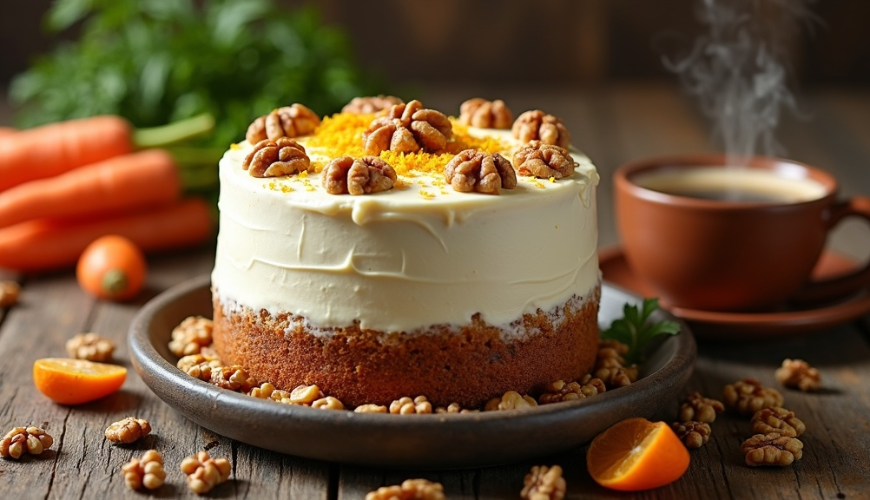
Carrot cake has long been somewhat of a "secret weapon" for home bakers. At first glance, it may seem unassuming, yet it surprises with its moistness, spicy aroma, and how naturally it suits both afternoon coffee and more festive occasions. And what's more: gluten-free carrot cake is no longer a "make-do" substitute, but a full-fledged option that can be enjoyed even by those who normally don't worry about gluten. All it takes is understanding a few simple principles, choosing the right flour, and not overdoing it with sweetness. After all, carrots themselves provide the dough with a gentle sweetness and juiciness – and that’s exactly why this cake often turns out well even for those who rarely venture into baking.
You might be wondering: is it really possible to bake a gluten-free carrot cake that isn't crumbly, dry, or "oddly" dense? Yes, and it can even be a simple and good carrot cake recipe that can be managed in a regular kitchen without special equipment. Gluten-free baking has its rules, but with carrot cake, the advantage is that the ingredients themselves help hold the dough together. Carrots, eggs, nuts, and the right choice of flour do much of the work for you.
Why carrot cake works even without gluten
Gluten in traditional baking acts as a "network" that holds the structure of the dough. When it's missing, some pastries easily fall apart or seem overly fragile. However, carrot cake is a type of dessert that naturally relies on moisture and a denser structure – and that's a big advantage for the gluten-free version. Grated carrots release water during baking, nuts add fat, and eggs help bind everything together. The result can be surprisingly stable, moist, and rich in flavor.
Choosing the right flour is crucial so it doesn't taste "empty." In practice, a combination of rice and buckwheat flour, or a fine gluten-free baking mix, often works best. Rice flour is neutral, buckwheat adds a slightly nutty tone that pairs excellently with carrots and cinnamon. For an extra step, almond flour or ground nuts can be used – they can give the cake a more luxurious, fuller flavor and also help with moisture.
Yet, there are a few small details that determine whether the result will be "just good" or truly great. One of them is not overdoing it with the flour. In gluten-free recipes, it’s tempting to add more when the batter seems runny, but the carrot will release juice, and the flour will gradually absorb it. The second point is spices: cinnamon, ginger, or a pinch of nutmeg can turn an ordinary dessert into something that fills the whole house with fragrance and feels almost festive. And the third thing? Letting the cake rest after baking. Moist cakes often "settle" only after cooling, when the flavors blend, and the structure firms up.
For those who like authoritative sources, recommendations for safe gluten-free eating and contamination risks for celiac disease can be found on the Celiac Disease Foundation (https://celiac.org/) website or information about a gluten-free diet from the NHS (https://www.nhs.uk/conditions/coeliac-disease/). In regular home baking, this is important especially if baking for someone with celiac disease – it’s not just about being "gluten-free" but also about the purity of ingredients and utensils.
How to easily make a gluten-free carrot cake that is moist and fragrant
The notion that a recipe for gluten-free carrot cake must be complicated is a common misconception. In reality, it can be based on several common ingredients that are easy to find and work reliably. Ideally, it uses finely grated carrots, quality oil (or melted butter), eggs, and a blend of gluten-free flour supplemented with ground nuts. Sweetening can be with regular sugar, cane sugar, or perhaps a combination with maple syrup; just keep in mind that liquid sweetener slightly changes the consistency of the batter.
How the carrot is prepared also plays a big role. Coarsely grated creates a more pronounced structure; finely grated, on the other hand, "disappears" and only leaves moisture. Most people prefer finer grating because the cake then feels more compact and slices better. Nuts are a chapter of their own: walnuts are classic, pecans feel more festive, and hazelnuts add an intense aroma. And for a really simple route, use a mix of nuts that are available at home.
There is also one small detail that is often underestimated: gluten-free batter sometimes needs a bit more time to "bind." It doesn’t mean waiting an hour; ten minutes on the counter before pouring into the pan is enough. The flour and nuts absorb some of the liquids, the batter thickens, and baking tends to be more even.
And what about the cream? Carrot cake is often paired with a cream cheese frosting, which is slightly tangy and balances the sweetness of the cake. If looking for a lighter option, quark or a plant-based alternative can be used. For the gluten-free version, the key is mainly that the cream isn't unnecessarily heavy and doesn’t overly sweeten the cake. The carrot and spices already create a "dessert" feel – and that’s where its charm lies.
A short quote that fits well in the kitchen is often repeated: "Less is sometimes more." This is doubly true for carrot cake – when sugar and cream are not overdone, the taste of carrots, nuts, and spices shines, and the cake doesn’t feel tiring even after a larger piece.
Simple and good recipe for gluten-free carrot cake (cake + cream)
This simple recipe for gluten-free carrot cake is designed to be baked even on a weekday yet looks "festive" enough when garnished with nuts or citrus zest. It is suitable for a round pan with a diameter of 22–24 cm.
Cake
You will need:
- 300 g carrots (finely grated)
- 3 eggs
- 120–150 g cane sugar (to taste)
- 120 ml quality oil (e.g., sunflower or canola)
- 180 g gluten-free flour (ideally a universal baking mix or a combination of rice and buckwheat)
- 80 g ground walnuts (or almonds)
- 2 teaspoons gluten-free baking powder
- 1 teaspoon baking soda
- 2 teaspoons cinnamon
- a pinch of salt
- optionally: zest of 1 organic orange or lemon, a handful of chopped nuts into the batter
The process is simple and doesn’t feel "laboratory-like." First, beat the eggs with sugar into a lighter foam to incorporate some air into the batter. Then whisk in the oil and add the carrots. In another bowl, mix the flour, nuts, baking powder, soda, cinnamon, and salt. The dry mixture is gradually incorporated into the wet one – a spatula or wooden spoon is sufficient, no need for lengthy beating. Let the batter stand for a few minutes while preheating the oven to 170–175 °C.
Line the pan with parchment paper or grease and dust it (rice flour is handy for gluten-free baking). Pour the batter into the pan and bake for approximately 40–50 minutes. Time may vary depending on the oven and the juiciness of the carrots, so the classic toothpick test is best: if it comes out dry or with just a few crumbs, it’s done. Let the cake cool briefly in the pan before turning it out onto a rack. It’s best to slice and fill when it’s completely cooled – this prevents crumbling and the cake binds beautifully.
Cream (classic, reliable version)
For the cream you’ll need:
- 250 g cream cheese (e.g., type cream cheese)
- 150–200 g quark (for a lighter taste and firmness)
- 60–90 g powdered sugar to taste
- 1 teaspoon vanilla extract or vanilla
- a bit of lemon juice or zest (optional)
Simply mix everything briefly into a smooth cream. The key is not to overbeat, so the cream doesn’t thin out. The cake can be sliced into two layers, spread, and the remaining cream put on top. Decorate with chopped nuts, thin carrot strips, or simply dust lightly with cinnamon. If left in the refrigerator for a few hours, the flavors meld and the cream firms – often it’s even better the next day.
A small trick when in a hurry
If there’s no time for layering, the cake can be left whole, and the cream spread only on top. The result still looks great, just with less work and fewer crumbs on the countertop. And if the cake is to be taken to a gathering, this "single-layer" version is also easier to transport.
In real life, carrot cake often becomes a rescue when something needs to be baked quickly for a mixed company – someone doesn’t eat gluten, someone doesn’t want overly sweet desserts, and someone loves the classic. Imagine a typical situation: a family gathering on a Sunday afternoon, with coffee, tea, a few bowls of fruit on the table, and next to it, a cake that looks "normal" at first glance. Only after the second bite do people start to ask what makes it so moist and fragrant – and only then does it come out that it’s a gluten-free carrot cake. This moment of surprise is pleasant because it shows that gluten-free baking doesn’t have to be a compromise or exotic, but simply another way to make a good homemade dessert.
Moreover, using quality ingredients is a nice step towards a more sustainable kitchen. Nuts and carrots are readily available, often local, and the recipe can easily be adapted to what’s on hand. Someone might add raisins soaked in tea, another might substitute part of the flour with ground almonds, and someone else might reduce the sugar and add more citrus zest. That's why carrot cake is so friendly: it holds its shape, forgives slight deviations, and yet retains its character.
And if baking for a celiac, it’s worth keeping an eye on details beyond the recipe itself – a clean pan, beaters, cutting board, and especially ingredients clearly labeled gluten-free. It’s not about fear-mongering, but rather respect for the fact that even a small amount of gluten can be a problem for some. The feeling is all the better when a dessert appears on the table that is safe and genuinely tasty.
Carrot cake has another appealing quality: it can be eaten "as is," without cream, perhaps as a moist loaf for a snack, and it will still be good. With cream, it transforms into a more festive version suitable even for birthdays. And those who have ever wondered how to easily bake a gluten-free carrot cake usually find that the biggest obstacle wasn’t the recipe, but the fear that it wouldn’t be right. Yet, all it takes is one successful attempt to make it a staple, pulled out of the sleeve whenever something reliable, fragrant, and just sweet enough is needed.