

# What Makes Polish Pierogi So Popular in Czech Cuisine Pierogi – tradiční polské knedlíčky plněné
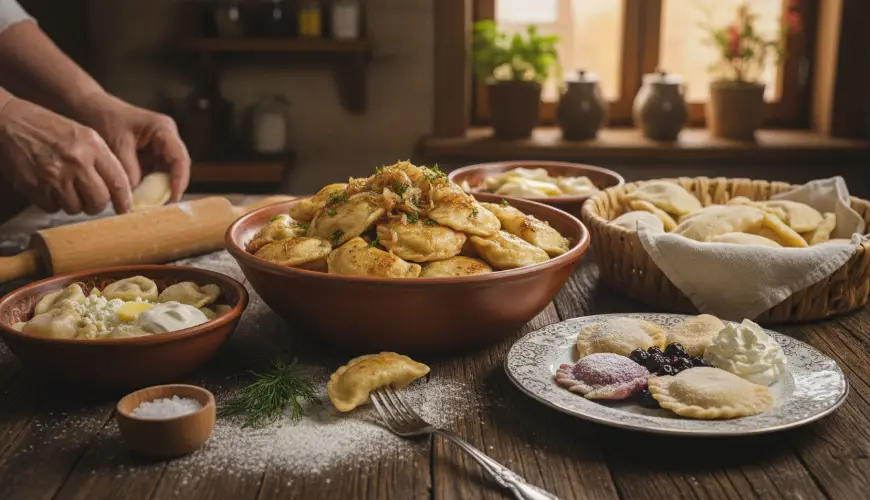
There are dishes that transcend borders and become part of the collective memory of an entire region. Polish pierogi are exactly such a dish – filled dough dumplings that have been finding their way to tables from Kraków to Warsaw for centuries, and today increasingly to tables in Czech households as well. It might seem like an exotic speciality, but on closer inspection, we find that pierogi are surprisingly close to Czech cuisine. They are essentially relatives of our knedlíky, filled pasta, and other dough creations that Czech cuisine knows well. And yet this Polish dish retains its unmistakable character, which is well worth rediscovering.
The word "pierogi" comes from the Old Slavic term "pir", meaning a celebration or feast. This etymology suggests that pierogi were not always an everyday food of ordinary people – they were originally cooked for special occasions, celebrations, and holidays. Over time, however, they became a symbol of domestic comfort and the family table, a dish passed down from generation to generation along with a family recipe and memories of grandmother's hands working with the dough. Today, Polish pierogi are listed among traditional Polish foods and their preparation is considered part of Poland's intangible cultural heritage.
Try our natural products





Where pierogi come from and what makes them special
The history of pierogi is more complex than it might seem. According to Polish culinary historians, the first references to filled dough dumplings in Polish sources date back to the 13th century, when monks brought them to Poland from the Far East. Other theories speak of the influence of Central European and Ukrainian cuisine, where similar dishes existed under various names – varenyky in Ukraine, pelmeni in Russia, or manti in Turkey. This interconnectedness shows that the idea of filling dough with meat, cheese, or vegetables is common to humanity across cultures and centuries.
What sets Polish pierogi apart from the rest, however, is their distinctive preparation and variety of fillings. The classic dough is made from flour, eggs, salt, and warm water – it is soft, pliable, and pleasantly smooth after cooking. Fillings range from the traditional combination of mashed potatoes, cottage cheese, and fried onions, through sauerkraut with mushrooms, minced meat, and spinach with cheese, to sweet versions with forest berries or a cottage cheese filling dusted with sugar and sour cream. It is precisely this variety that makes pierogi suitable for any occasion – as a main course, a side dish, or a dessert.
The preparation of pierogi is itself a ritual. Polish families gather around the kitchen table to make them, with everyone assigned a task – some roll the dough, others shape round discs, others still fill and fold the characteristic half-moons with firmly pressed edges. This shared ritual has a value that far exceeds the meal itself. As the Polish writer Ryszard Kapuściński once noted: "Food is not just nourishment for the body; it is a language in which we speak of our origins and our bonds." And pierogi are precisely such a language – comprehensible to anyone who has ever sat at a family table and watched a pile of flour become an evening meal.
Take, for example, the Novák family from Brno. Jana Nováková first encountered pierogi ten years ago on a trip to Kraków, where she tasted them at a small restaurant near Wawel Castle. She was so taken with them that she asked for the recipe, and today she cooks them regularly every Sunday. Her children have grown so fond of them that they prefer them to traditional knedlíky, and Jana says that making pierogi has become their family's Sunday tradition. This story is not unique – similar families who have fallen in love with the Polish dish and adapted it to their own tastes are becoming more numerous throughout the Czech Republic.
Why pierogi belong on the Czech table too
Czech cuisine and Polish cuisine share a great deal in common – both draw from a deep Central European tradition, both work with potatoes, cabbage, mushrooms, and various types of cheese, and both place emphasis on hearty, home-cooked food. It is therefore no surprise that pierogi find such a natural place in the Czech context. They are essentially filled dumplings that Czechs know from Italian cuisine in the form of ravioli or from Asian cuisine in the form of gyoza – but in their Polish version, they are the closest culturally and in terms of flavour.
Interestingly, interest in Polish cuisine in the Czech Republic has been growing significantly in recent years. Contributing factors include the growing tourist traffic between the two countries, the increasing number of Poles living in the Czech Republic, and also the general trend of interest in authentic, regional, and traditional foods as a counterweight to fast food and industrially processed products. People are rediscovering the pleasure of preparing food by hand, of slow cooking, and of sharing meals with loved ones. And pierogi are in this respect an ideal dish – their preparation takes time, but it is time spent meaningfully.
From a nutritional standpoint, pierogi are no empty food. It depends, of course, on the filling, but the potato and cottage cheese version provides a decent amount of protein, carbohydrates, and calcium. The sauerkraut and mushroom variant is practically vegan and offers fibre, B vitamins, and beneficial probiotic substances from fermented cabbage. For a healthier version, the dough can be enriched with wholemeal flour or spelt, giving the dish a higher fibre content and more complex carbohydrates. According to the World Health Organization, the key to a healthy diet is variety and natural ingredients – and this is precisely what pierogi made with fresh ingredients deliver without difficulty.
The economic aspect cannot be overlooked either. Pierogi are a dish that is surprisingly inexpensive to prepare, yet filling, and can be made in advance and frozen. Freshly cooked pierogi can be stored in the freezer once cooled, providing a ready supply for days when there is no time to cook. They can then simply be added directly to boiling water or pan-fried in butter – the result is always excellent. This practicality is one of the reasons why pierogi are so popular in Poland even among busy families and students.
It is also worth mentioning how pierogi are evolving and being modernised. Contemporary Polish chefs are experimenting with unconventional fillings such as salmon with ricotta, goat's cheese with beetroot, or even chocolate with raspberries. In the Czech Republic, similar creative variations can be sampled at several restaurants specialising in Polish cuisine that have opened in recent years in Prague, Brno, and Ostrava. This modernisation of a traditional recipe shows that pierogi are a living dish that adapts to the times and to tastes without losing its foundation and spirit.
For those who want to start making pierogi at home, it is useful to know that there are several basic rules that will guarantee success:
- The dough must rest for at least 30 minutes wrapped in cling film, so that the gluten relaxes and the dough rolls out more easily
- The filling should be firm enough and cooled so that it does not run when assembling
- The edges must be firmly pressed together and can be decorated with a characteristic pattern by pressing with a fork or finger
- Cooking takes place in salted boiling water for 3–5 minutes from the moment the pierogi float to the surface
- Serving can be simple – with fried onion, sour cream, or a little butter
Pierogi are also a dish that naturally lends itself to sustainability and eco-friendliness, values that are increasingly important today. The basic ingredients – flour, potatoes, cabbage, mushrooms, cottage cheese – are local, seasonal, and available from Czech and Polish farmers. Preparing them at home means no unnecessary packaging, no preservatives, and full control over what we eat. At a time when many people are looking for ways to live and eat more sustainably, pierogi offer an elegant and tasty solution.
The rediscovery of Polish pierogi in Czech cuisine is therefore not merely a culinary trend – it is a return to values shared by both Czech and Polish cuisine: the integrity of ingredients, the joy of preparing food together, and traditions that survive generations because something deeper than a mere recipe is encoded within them. Whether you decide to try pierogi for the first time or prepare them from a recipe inherited from your grandmother, one thing is certain – this is not a dish you sit down to alone.