

# Seasonal Fruits and Vegetables Month by Month
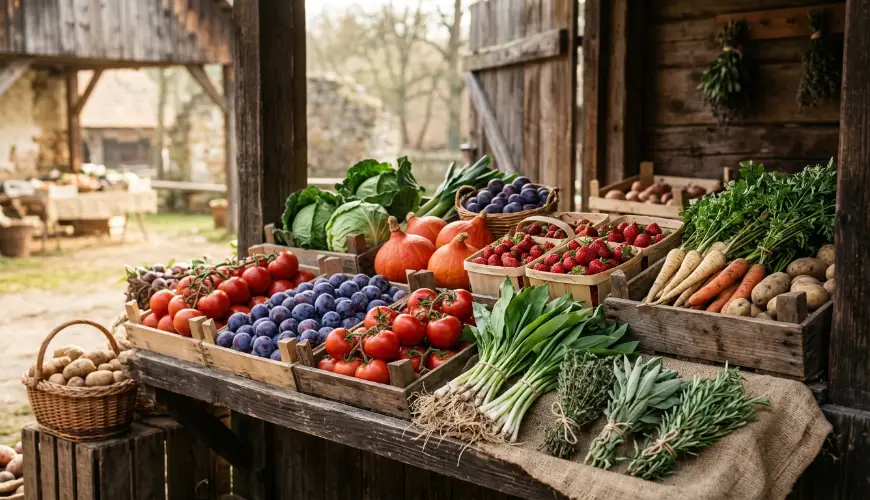
Shopping locally and seasonally sounds like a modern trend, but in reality it is a return to what people have done for centuries. Our grandmothers knew exactly when strawberries were picked, when plums would come into season, and why it makes sense in February to reach for fermented cabbage rather than a watery tomato salad shipped from the other side of the world. Today, this natural rhythm is coming back to the fore – and no wonder. Fruit and vegetables harvested at the right time taste better, contain more nutrients, and do not burden the environment with unnecessary transport miles.
But where to start? How do you tell what is truly seasonal and what supermarkets are cleverly passing off as fresh? The answer lies in a simple tool that anyone can bookmark or stick on the fridge – a seasonal fruit and vegetable calendar tailored specifically to the conditions of the Czech Republic.
Before we dive into the individual months, however, one key fact is worth mentioning. According to research by Our World in Data, the transport of food accounts for a relatively small share of its total carbon footprint – the method of cultivation has a far greater impact. Nevertheless, local and seasonal eating makes enormous sense: it supports Czech farmers, shortens the time from harvest to plate, and the result is flavour-packed vegetables that industrially grown products simply cannot match.
Try our natural products




Spring and Summer: A Season of Abundance at Gardens and Markets
Winter in the Czech Republic is not particularly generous from a gastronomic point of view, but once March arrives, nature wakes up surprisingly quickly. The first heralds of spring are wild garlic, spinach, radishes, and spring onions. Wild garlic grows in deciduous forests and its season lasts only a few weeks – roughly from March to May. Anyone who misses it must wait a whole year. It is precisely this fleeting quality that makes seasonal cooking so fascinating: it forces you to be aware of time and to look forward to things in advance.
In April, asparagus joins them – a vegetable that has gained enormous popularity in the Czech Republic in recent years. White asparagus from South Moravia or the Elbe lowlands is among the finest things Czech cuisine has to offer in spring. Its season is short, however – traditionally ending around 24 June, the feast of St John. Alongside it come the first lettuces, parsley, chives, and radishes, so the April and May table can be surprisingly varied.
The turn of May and June brings the first strawberries. You can recognise the truly homegrown ones – not greenhouse-grown – instantly: they are smaller, irregular in shape, and smell so intensely that their fragrance drifts from the basket across the entire market. Garden strawberries or those from a local grower contain significantly more antioxidants and vitamin C than those transported hundreds of kilometres in refrigerated lorries. It is no coincidence that they are called the "queen of summer fruit".
Summer in Czech conditions is then a true celebration. July and August bring tomatoes, cucumbers, courgettes, peppers, green beans, peas, raspberries, blueberries, cherries, and sour cherries. It is precisely during these months that it makes sense to visit a farmers' market or drive directly to a grower and buy larger quantities – for preserving, freezing, or drying. Our grandmothers knew it well: summer abundance must be cleverly stored away for the winter months.
Herbs deserve a special mention. Basil, marjoram, thyme, and oregano reach their peak in July and August, when their essential oils are most intense. Drying them or freezing them in olive oil is one of the simplest ways to carry a piece of summer through to October.
August and September are then the months of plums, pears, and the first apples. The Czech Republic has a rich tradition of growing stone fruit – varieties such as Čačanská lepotica, Stanley, or the semi-wild homegrown plums from old orchards have no rivals in supermarkets. These old varieties are more valuable not only in terms of flavour, but also from the perspective of biodiversity. Research by the Crop Research Institute has long been drawing attention to the disappearance of traditional fruit varieties from the Czech landscape and to the importance of preserving them.
Autumn and Winter: The Time of Root Vegetables and Fermentation
October arrives with what many consider the most beautiful time of year. Markets fill up with pumpkins, beetroot, parsnips, celeriac, carrots, leeks, and cabbage. The pumpkin, which was something of an exotic curiosity in the Czech Republic just twenty years ago, has today secured a firm place in Czech cuisine. Varieties such as Hokkaido or Butternut are easy to grow, keep in storage for several months, and their sweet, nutty flavour is wonderfully suited to soups and roasted dishes.
Cabbage is then the symbol of Czech autumn and winter cuisine par excellence. It is said that "cabbage keeps the farmer alive" – and this folk wisdom has a solid basis in reality. Fermented cabbage, or sauerkraut, is one of the richest natural sources of probiotics and vitamin C. Our ancestors consumed it throughout the entire winter precisely to avoid scurvy and other ailments caused by vitamin deficiencies. Today we know that the gut microbiome influences immunity, mood, and overall health – and sauerkraut benefits it more than many fashionable dietary supplements.
November and December are the months in the Czech Republic when the local season for fresh vegetables almost comes to an end. But it is precisely now that what has been stored comes into its own: apples from a cool cellar, potatoes from the store, carrots and parsley kept in sand, dried mushrooms, preserved tomatoes. Anyone who thought ahead in autumn can eat locally and seasonally even in January or February. The winter months also bring kale, kohlrabi, and various types of lettuce grown in covered growing facilities.
January and February are gastronomically the most modest – and at the same time the most honest. On the plate is what nature truly offers: stored vegetables, pulses, whole grains, fermented foods, and dried fruit. It is in these months that it pays to reach for local apples, which when properly stored last surprisingly long, or for sauerkraut and beetroot, which undergo fermentation and thereby acquire new flavour and nutritional qualities.
A Practical Overview: What to Harvest Month by Month
For easy reference, it is useful to have a basic guide to what each month offers in the Czech Republic:
- January – February: stored apples, pears, carrots, potatoes, celeriac, beetroot, cabbage, parsnip, sauerkraut
- March – April: spinach, radishes, spring onions, wild garlic, first lettuces, chives
- May – June: asparagus, strawberries, peas, spinach, salad cucumbers, radishes, dill
- July – August: tomatoes, peppers, courgettes, cucumbers, green beans, raspberries, blueberries, cherries, sour cherries, apricots, peaches, herbs
- September – October: plums, apples, pears, pumpkins, sweetcorn, cabbage, leeks, kohlrabi, mushrooms
- November – December: root vegetables, kale, pumpkins, apples, nuts, stored potatoes
This overview is of course a guide – specific harvest times vary depending on the year, region, and weather. A warm spring can bring strawberries two weeks earlier, while a cool summer may delay tomatoes. This very variability is part of the magic of seasonal eating.
An interesting real-life example is offered by a family from the Vysočina region who decided three years ago to shop exclusively from local farmers and according to the season. At first it was challenging – they had to learn to plan meals differently, stop buying tomatoes in December, and get used to the fact that there are simply no strawberries in February. Gradually, however, they found that their diet had become more varied and more flavourful. Each month brought something new to look forward to. And their family food budget fell, because seasonal local produce is generally cheaper than imported goods.
As the writer and activist Michael Pollan aptly put it: "Eat food. Not too much. Mostly plants." A seasonal calendar is one of the simplest ways to put this principle into practice – without expensive apps, complicated diets, or the need to become a nutrition expert.
Seasonal and local eating is not about perfectionism. Nobody expects you to stop buying citrus fruit or bananas because they do not grow in the Czech Republic. It is about making a conscious decision to prioritise what is available here and now – and gradually building a relationship with the rhythm of nature that accompanied our ancestors for generations. Farmers' markets, box delivery schemes from local growers, or simply paying attention when shopping at the supermarket – these are small steps that together make a big difference. And the best reward is what ends up on the plate: food full of flavour, aroma, and vitality, which truly comes from the place where you live.