
Tres leches recipe for everyone who loves unique desserts
Tres Leches - The Sweet Dessert Loved by the Whole World
Tres leches, literally "three milks," is a dessert that has gained increasing popularity beyond Latin America, where it originated, in recent years. Its charm lies in the combination of simple ingredients with an unexpectedly rich flavor that delights even those who don't usually seek out sweets. This moist cake literally soaked in a mixture of three types of milk has become a phenomenon across continents. But what exactly makes the tres leches cake such an exceptional dessert?
The essence of tres leches lies in a simple sponge cake base, which, after baking, is drenched in a mixture of condensed, evaporated, and regular milk. The result is a fluffy yet juicy cake that almost melts in your mouth. Although it may seem that such a combination would be too sweet or even heavy, the opposite is true. Thanks to perfectly balanced proportions and a light batter, the tres leches cake feels fresh and gentle, making it an ideal dessert for coffee or festive occasions.
The Origin of Tres Leches Cake – Who Was the First?
Although many Latin American countries claim the origin of this dessert as their own, the original recipe for tres leches cake likely emerged sometime in the first half of the 20th century. Mexico or Nicaragua is most often cited as its home. Some food historians even suggest that the inspiration for pan tres leches, as it is sometimes called in Hispanic communities, might have come from European desserts like tiramisu or trifle, which also use soaked sponge cakes.
Interestingly, dairy companies also supported the spread of the recipe. For example, Nestlé distributed tres leches recipes as part of promoting its condensed milk in the 1940s. And it was then that this cake began to have a more pronounced culinary footprint across the Hispanic world. Today, it's not uncommon to encounter its versions in the USA, Spain, and even Japan or the Philippines.
What Makes Tres Leches So Unique?
The base is a simple, airy sponge without butter, which is allowed to cool completely, and then literally bathed in a mixture of three milks: sweetened condensed milk, unsweetened evaporated milk, and regular whole milk. As a result, the sponge absorbs the liquid but doesn't fall apart. Sometimes cream or plant-based alternatives like coconut milk are used instead of regular milk – these variations make the tres leches recipe adaptable to various diets and tastes.
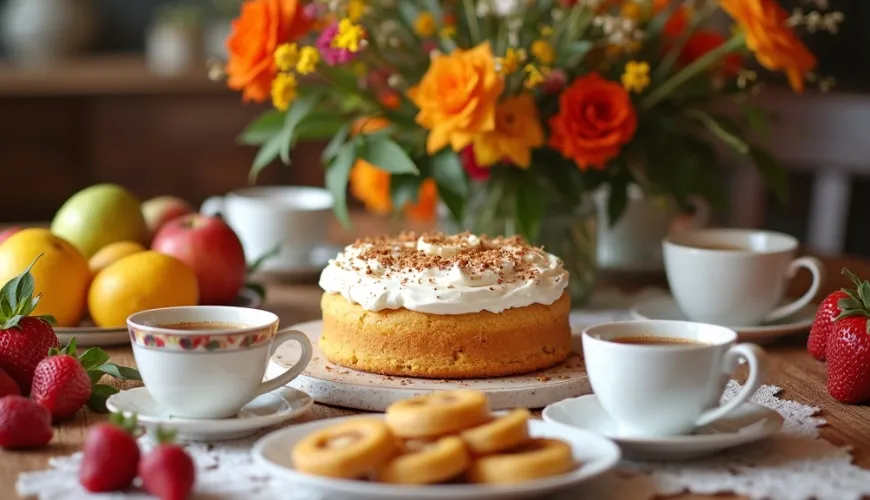
The resulting texture of the cake is incredibly moist yet light – as if combining the consistency of a pudding with a fluffy sponge. The surface is usually topped with whipped cream or meringue, sometimes even fresh fruit, cinnamon, or caramel. Interestingly, in some variants, rum or another alcohol is added to the milk mixture, turning the cake into an elegant adult dessert.
How to Prepare a Homemade Tres Leches Cake?
Although the tres leches cake might seem like a dessert for experienced bakers, its preparation is surprisingly easy. The key is a quality sponge batter – fluffy yet firm, to hold its shape after being soaked. No butter or oil is needed, which also contributes to its lightness. After baking, the sponge is allowed to cool completely and then is evenly pierced with a fork to better absorb the milk mixture.
The mixture of the three milks is then slowly poured over the sponge, which is left to soak for several hours (ideally overnight) in the fridge. The decoration is up to each individual – some prefer classic whipped cream, others add berry jam or chocolate shavings.
For inspiration – in one café in Barcelona, they prepare a vegan version of the tres leches cake with almond, coconut, and soy milk, complemented with raspberry purée and mint leaves. Fresh, moist, and full of flavor – and proof that the traditional recipe can be a foundation for endless creativity.
Why Is Tres Leches Winning Hearts Even in Europe?
While in Latin America this cake is a common part of family celebrations and regular café offerings, it has only recently started to become popular in Europe. The reasons are clear – the search for new flavors, a return to simpler recipes, and a growing interest in international cuisine. Additionally, people are discovering that even though the tres leches recipe uses three dairy components, the result is not heavy or overly sweet.
This is also supported by the shift in the perception of sweets. Consumers are increasingly focusing on the quality of ingredients and the authenticity of recipes. And the tres leches cake is precisely the kind of dessert that doesn't feel industrial – on the contrary, its homemade nature is evident with the very first bite.
An important role is also played by the sharing of recipes on social media. Images of effectively soaked sponge and rich whipped cream are visually very appealing and invite experimentation. Food bloggers and influencers often use local ingredients in their recipe versions – for example, Czech farmer's milk or homemade fruit jams as an accompaniment, thereby bringing this exotically sounding dessert closer to domestic conditions.
Tips and Tricks for Achieving Perfect Results
Although tres leches is simple, a few details can decide whether the result will be merely average or absolutely fabulous:
- Don't underestimate the quality of dairy products. Using whole milk and quality condensed milk is truly worth it.
- Let the cake rest. The longer it has to soak, the better the flavors will meld.
- Experiment with flavors. Vanilla extract, lime zest, or a drop of rum can give the cake a personal touch.
- Consider a gluten-free version. The sponge can easily be made with gluten-free flour without compromising the texture.
Perhaps you've tasted tiramisu or the French savarin, but tres leches is an experience of its own. A dessert that combines simplicity with elegance and flavor depth with visual appeal. "It's like a hug in the form of a cake," once remarked Mexican chef Gabriela Cámara in an interview for the New York Times – and it's hard to disagree with that.
Whether you decide to prepare tres leches according to the classic recipe or bring your own creativity into it, one thing is certain – this delicious, moist cake has the potential to become a beloved staple in your kitchen as well. And that's where its magic lies – in the simplicity that can delight everyone.