
Tips for Preparing Perfect Bao Buns That Will Impress Your Guests
Fluffy Bao Dumplings - An Asian Delicacy That Has Captivated the World
At first glance, they may seem like ordinary dumplings. Soft, white, round or slightly elongated, clouds of steam hovering above them like mist over a rice field. But once tasted, one understands why bao buns have become one of the most sought-after dishes at modern food festivals and in home kitchens.
Originating from China, they have won hearts worldwide. Bao dumplings, sometimes referred to as "gua bao" or simply "bao", are proof that simple ingredients can create an extraordinary experience – when combined with a bit of patience and a sensitive approach.
What Exactly Are Bao Dumplings?
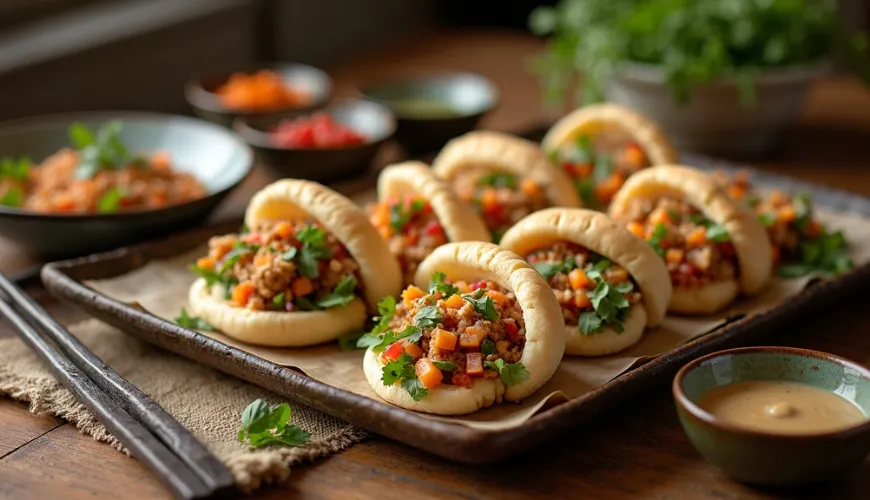
Traditional Chinese "baozi" or "bao" are soft steamed dumplings made from leavened dough, usually filled with meat, vegetables, or sweet filling. There are many varieties, but in recent years, the "open" type – bao buns resembling a small pocket sandwich into which any filling can be placed – has gained immense popularity.
When one says "bao bun", many envision this modern version – soft dough folded in half and filled with a fragrant mixture of meat, fresh vegetables, sauces, and often herbs like coriander or spring onion. Such "bao" not only tastes great but also looks beautiful – making it a favorite not only among food bloggers but also in restaurants focused on street food.
Interestingly, although bao buns are often referred to as "dumplings", their preparation and use are much more versatile than the traditional dumplings we are accustomed to in Czech cuisine. They are not just a side dish but a complete meal in one bite.
Bao Buns at Home? Yes, You Can!
You might think that preparing such fluffy bao dumplings at home is quite a challenge. But the truth is, with a little patience and the right recipe, even those who don't have much experience with Asian cuisine can manage it.
The bao bun recipe is not complicated, but the dough is key. It is made from wheat flour, water, yeast, sugar, and baking powder. A bit of oil is often added to make the dough pliable. What makes bao special, however, is the preparation method – steaming. It is this process that keeps the dumplings fluffy, soft, and without the crust typical of baked goods.
The filling is then just a matter of imagination. Traditionally, pork is used, often in the form of pulled belly marinated in soy sauce, hoisin sauce, and sesame oil. But a great choice is also tofu, tempeh, jackfruit, or a combination of grilled vegetables with a spicy sauce for a vegan version.
One of the advantages of bao buns is their versatility – they can be filled with anything you like and adapted to your taste and dietary habits.
The Story of a Bao - From Taiwan to the European Table
Although bao's origins date back to ancient China, specifically to the Three Kingdoms period, today's form of open bao buns has strong roots in Taiwan. From there, thanks to immigrants and modern gastro concepts, it has spread worldwide. The well-known New York chef David Chang is considered one of the pioneers who introduced bao buns to Western audiences as stylish "comfort food".
Today, it's not difficult to find bao on the streets of London, Paris, Berlin, or Prague. In Prague, several eateries have appeared in recent years that have built their entire concept around bao buns. But interest in home preparation is also growing, as evidenced by the increasing searches for terms like “bao recipe” or “how to make bao dumplings at home”.
One mother from the Central Bohemian region shared on social media how during the pandemic she discovered the charm of preparing bao buns at home. She started with a classic recipe but soon began experimenting – instead of pork, she used smoked tofu, added pickled onions, carrots, and coriander to the filling, and not only her children but also her neighbors, who came to her for "Asian burgers", loved the result.
Why Bao? A Combination of Flavor, Texture, and Aesthetics
One reason why bao dumplings are so popular is the play of textures and flavors. The soft dough contrasts with crunchy cucumbers, juicy meat, or marinated tofu. The gentle sweetness of the dough harmonizes with spicy sauces. And visually? Bao dumplings are a feast for the eyes – elegant, clean, minimalist, yet full of colors and details.
All of this makes them an ideal choice not only for a dinner for two but also for festive occasions or friendly gatherings. And what's more, their small size is perfect for sharing – everyone can create their own bao according to taste.
Tips for Perfect Homemade Bao Buns
For those who dare to try the bao bun recipe at home, here are a few proven tips:
- Don't rush the rising – the dough needs its time, ideally two hours in a warm place.
- Use a steamer basket – preferably bamboo, which circulates steam well and doesn't drip onto the dough.
- Place parchment paper between individual bao – this prevents sticking and deformation of the shape.
- Steam at medium temperature – intense steam can "inflate" the bao unevenly.
- Serve immediately after cooking – bao is best fresh, still warm, and soft.
And if you don't feel like making dough from scratch, there are quality frozen options that can just be steamed and filled to taste – an ideal shortcut for busy weekdays.
Bao buns are not just food – they are joy, a ritual, and a little art. As the British food critic Jay Rayner said: “They are little pillows of happiness.” And perhaps in today's world, where we seek comfort, authenticity, and new flavors in one, they have found such a special place.
Next time you're looking for an idea for an original dinner or want to surprise your guests with something new, think of bao dumplings. They can offer more than meets the eye – both in taste and culturally.