

Microneedling, which supports the natural renewal of the skin, can improve texture and tone.
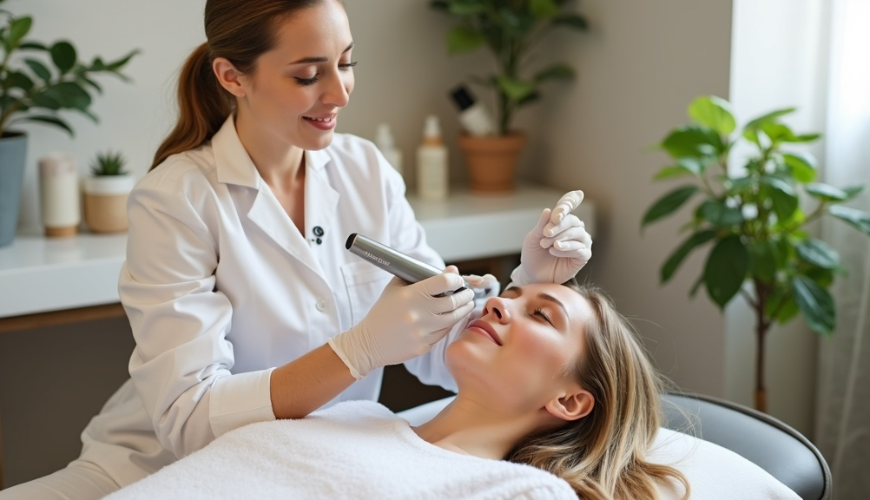
When it comes to modern skincare, most people think of serums with active ingredients, SPF, and perhaps an occasional visit to a beautician. However, in recent years, a method has come to the forefront that seems to go "against intuition": instead of just pampering and nourishing the skin, it gently and controllably disrupts it with small punctures. This is the principle behind microneedling (you might also encounter the term microneedling). It sounds a bit dramatic, but it's actually a well-thought-out procedure with a single aim – to support the skin's natural renewal and improve its appearance and texture.
You might have come across "before and after" photos, or been intrigued by the promise that microneedling can unify skin tone, soften acne scars, or smooth fine lines. Yet, there are many half-truths surrounding it: is it the same as using a dermaroller at home? Does it hurt? And most importantly – who is microneedling suitable for and when is it better to choose a different route?
What is microneedling and why does it work
To understand what microneedling is, just think of it as a small "training" session for the skin. During the procedure, a device with very fine needles (most commonly a dermapen) is used to create microchannels in the skin – tiny punctures at a precisely set depth. These microchannels close quickly, but in the meantime, they trigger an important reaction: the body perceives the situation as a minor injury and starts activating regenerative processes. In practice, this means increased production of collagen and elastin, substances associated with firmness, elasticity, and a "juicy" appearance of the skin.
It makes sense even in everyday life: the skin naturally renews itself all the time, but with age and environmental influences, it slows down. Microneedling acts as an "impulse" that boosts regeneration without being an aggressive intervention. It's not magic overnight but rather a strategic work with the skin's own potential.
Another frequently mentioned effect is that selected serums can temporarily be better absorbed thanks to the microchannels. However, this doesn't mean it's suitable to "inject" just anything into the skin. On the contrary – at this stage, purity, appropriate composition, and a professional approach are crucial. After the procedure, the skin is more sensitive and deserves simple, gentle care.
For basic orientation, it's useful to know that microneedling exists in several forms: from professional treatments in clinics and beauty salons to home tools like dermarollers. But here's where a significant difference lies: the depth of the puncture, sterility, and control of the procedure. Professionals work with adjustable depth, disinfection standards, and take into account the condition of the skin. Home experiments can be tempting, but they more often lead to complications – irritation, infections, or worsening pigmentation.
For those seeking factual context and a safety framework, information from the American Academy of Dermatology can be useful: https://www.aad.org (search for "microneedling"). They clearly describe what the method can do and what to watch out for.
Effects of microneedling: what to expect and what is more marketing
The wish is clear: smoother skin, smaller pores, fewer scars, unified tone. However, the effects vary depending on the condition of the skin, how deep the procedure goes, how often it's repeated, and what the subsequent care entails. Nonetheless, typical effects of microneedling that people most commonly observe can be described.
First and foremost, it's about improving skin texture. The surface can feel smoother, the skin appears "more polished," and often, the way makeup sits on it improves. For some people, the visibility of enlarged pores gradually decreases – not because the pores "close," but because the overall structure and firmness of the surrounding tissue improve.
A major topic is acne scars. Microneedling is one of the methods used in dermatology for atrophic (sunken) scars. It doesn't sound romantic, but it makes sense: where the structure is disrupted, controlled regeneration and collagen production can gradually smooth the surface. It's important to clearly state that deep scars won't disappear with a wave of a magic wand, but they can visibly improve.
Another area is fine lines and loss of elasticity. Microneedling is often recommended as a method that supports a natural "anti-aging" effect without altering facial expressions. For some people, skin firmness improves after a series of treatments, contours appear fresher, and fine lines soften.
Then there's pigmentation. Here, caution is needed: some types of hyperpigmentation can gradually improve, but sensitive individuals or poorly performed procedures can worsen pigmentation (e.g., with inadequate sun protection). That's why the simple sentence that sounds almost boring but is crucial is often repeated: without daily SPF, it doesn't make sense.
And what about the immediate "glow"? It can sometimes occur, but it's not the main goal. Immediately after the treatment, the skin is often red, tight, may be sensitive to touch, and resemble sunburn. Real changes manifest over time because collagen doesn't form overnight.
For a credible look at how microneedling works and where its limits are, overviews from Cleveland Clinic can be helpful: https://my.clevelandclinic.org (search for "microneedling"). It's a source that is both understandable and grounded in medical practice.
"The best results don't come from one miraculous visit, but from a well-planned series and reasonable care between treatments."
Results of microneedling: when they appear and how long they last
When discussing the results of microneedling, it's worth thinking in terms of time. Immediately after the treatment, redness usually appears, sometimes mild swelling, and the skin may be more sensitive for 1–3 days. Some might experience fine flaking or a feeling of dryness. This isn't a "worsening," but a typical reaction if everything is done correctly.
People often describe the first visible improvements after one to two weeks – the skin can appear more unified, smoother, and "fuller." However, significant changes, especially for scars or pronounced texture, usually reveal themselves after a series of treatments. In practice, several sessions are often recommended with weeks apart, but the exact plan should always be based on the skin's condition and expert recommendations.
How long does the effect last? This is a question that reads nicely in advertisements, but in reality, it depends on lifestyle, age, genetics, and how one continues to care for their skin. If skin is consistently exposed to the sun without protection, smoking, or chronic stress, no procedure can "overcome" it forever. Conversely, for people with a stable routine, who use gentle cosmetics and diligently protect their skin from UV exposure, the effect can be noticeable for longer.
One real example that repeats surprisingly often in salons: a person in their thirties who has been dealing with minor acne scars and uneven texture for years. They try exfoliation, masks, expensive serums, but always feel like their skin "casts a shadow" and makeup highlights the unevenness. After consulting with a specialist, they undergo several microneedling treatments, simplify their routine to a gentle cleansing gel, moisturizing cream, and SPF, and avoid irritating acids and retinoids during the recovery period. After a few months, the result isn't such that the skin changes beyond recognition, but something important often happens: the texture softens enough that the person no longer feels the need to "mask" it every day. And that's a change that can't be fully quantified, but everyone notices it in everyday life.
Who is microneedling suitable for (and when to choose another path)
The question of who is suitable for microneedling may be the most important because it can make it a great helper or an unnecessary risk. Generally, it may be suitable for people dealing with:
- acne scars (especially sunken/atrophic),
- uneven skin texture and rough surface,
- fine lines and loss of elasticity,
- enlarged pores (visually prominent),
- some forms of pigment irregularities (after expert assessment).
At the same time, there are situations where it's better to postpone or completely avoid the procedure. Microneedling is usually not recommended for active inflammatory acne (as the inflammation can spread), for skin infections, certain dermatological conditions, for those prone to forming keloid scars, and caution is warranted for those taking certain medications or with significantly compromised skin barriers. It always depends on individual assessment – and here it's fair to say that a quality establishment would rather refuse the procedure than promise a miracle.
A big chapter is home microneedling. It's understandable that people look for more affordable options, but with needles, "cheaper" is often paid for with higher risk. It's not just about pain, but mainly about sterility, proper depth, and subsequent care. If the goal is long-term skin improvement, it makes more sense to invest in professional treatment and focus at home on what has proven effects and low risk: gentle cleansing, hydration, and sun protection.
In this sense, microneedling is actually interestingly "eco-friendly" in a broader sense: it often leads people to stop buying ten products that conflict with each other and switch to a simpler, gentler routine. Less experimentation, less irritation, less packaging waste. Not because the procedure is miraculous, but because it prompts thinking of the skin as a living organ, not a surface that can be endlessly scrubbed.
For those who want to support results, they should also focus on things that sound almost banal: quality sleep, adequate hydration, a diet rich in proteins and micronutrients. The body builds collagen from what's available – and this applies to skin post-microneedling as well.
Finally, there's a question that deserves an honest answer: is microneedling for everyone who wants prettier skin? Not necessarily. Sometimes it's enough to adjust the routine, calm the barrier, and really start using SPF. Other times, a chemical peel, laser, or dermatological treatment might be more appropriate. Microneedling does have its place – as a method that can be effective when done properly, with respect for the skin, and realistic expectations.
And perhaps the biggest "secret ingredient" of the entire procedure is realistic expectations. Not expecting immediate transformation, but noticing gradual improvement made up of small changes: smoother surface, more even tone, a more pleasant feel to the touch. In combination with gentle cosmetics and a reasonable lifestyle, microneedling can become a step that gently moves the skin towards looking healthy – and that's a trend that never goes out of style.