

Micellar waters are suitable for almost everyone, but it's important to know their advantages and di
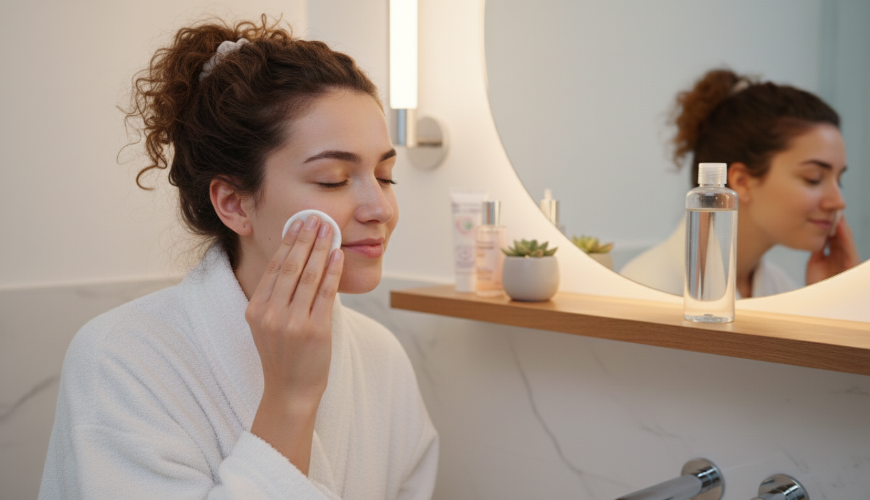
Micellar waters have been an absolute staple on bathroom shelves around the world in recent years. Just walk through any drugstore or cosmetics e-shop and you'll immediately come across dozens of different bottles promising gentle skin cleansing without the need for rinsing. But what actually is micellar water, how does it work, and is it really suitable for everyone? Let's take a closer look at this phenomenon, because behind this seemingly simple liquid lies some quite interesting chemistry and a number of practical questions worth considering.
The story of micellar water begins in France, back in the last century. Parisian tap water was traditionally considered hard and not exactly skin-friendly, so French women began turning to gentler alternatives for cleansing their faces. Micellar water became their answer to the problem – a liquid that can remove impurities and makeup without drying out or irritating the skin. From French pharmacies, it gradually spread around the world, and today you can find it in the range of virtually every cosmetic brand, from the most luxurious to the most affordable.
Try our natural products
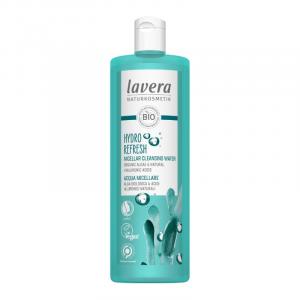
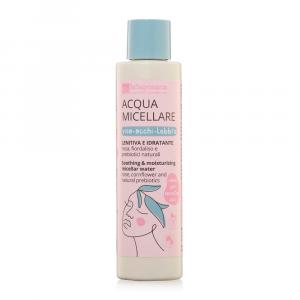
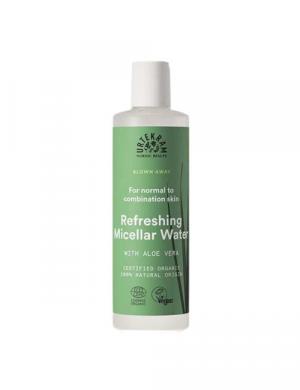
What is micellar water and what is it used for
To understand why micellar water works, we need to pause for a moment on the word "micelle." Micelles are tiny spherical structures that form when molecules of surface-active substances – so-called surfactants – meet water in a solution. Each such molecule has two ends: one attracts water (hydrophilic) and the other repels it while attracting fats (hydrophobic, or lipophilic). When these molecules group together in a solution, they form micelles – their fat-attracting ends point inward toward the center of the sphere and their water-attracting ends point outward. The result is a structure that can effectively absorb grease, makeup residue, dust, and other impurities from the skin's surface.
In practice, it looks very simple. Just pour a little micellar water onto a cotton pad and gently sweep it across your face. Upon contact with the skin, the micelles "latch onto" impurities and carry them away onto the pad. No scrubbing needed, no rinsing needed (although there are debates about that, which we'll get to later). It is precisely this simplicity of use that is behind the enormous popularity of micellar waters. For many people, they represent a quick and convenient alternative to traditional skin cleansing using foaming gels, milks, or oils.
Micellar water is most commonly used for makeup removal and basic skin cleansing. Many people incorporate it as the first step in their evening skincare routine, the so-called "first cleanser" as part of double cleansing. Some also use it in the morning to refresh the skin before applying other products. It is also popular for travel, when there simply isn't the time or space for an elaborate facial care ritual, yet you still want clean skin.
Interestingly, micellar waters today come in a wide range of variants. Some are enriched with hyaluronic acid for extra hydration, others contain chamomile or aloe vera extracts to soothe sensitive skin, and still others feature niacinamide or vitamin C for brightening. There are even biphasic micellar waters that combine a water and oil phase and handle waterproof makeup better. The selection is simply enormous, and navigating it isn't always easy.
Are micellar waters suitable for everyone, and what are their advantages and disadvantages
One of the most common questions people ask is whether micellar water is suitable for their skin type. Generally speaking, micellar waters are formulated to be as gentle as possible, which is why most of them are suitable even for sensitive skin. Dermatologists often recommend them as a gentle alternative for people who don't tolerate foaming cleansers or soaps well. According to the American Academy of Dermatology, gentle skin cleansing is one of the fundamental pillars of healthy skincare, and micellar waters fit very well into this concept.
However, "suitable for most" doesn't automatically mean "suitable for everyone." People with very oily or acne-prone skin may find that micellar water alone isn't enough to thoroughly cleanse pores. The surfactants in micellar water are effective on surface impurities, but they may not penetrate deeply enough to remove excess sebum from clogged pores. In such cases, it's better to combine micellar water with another cleansing product – for example, a gentle gel or foam.
Consider Markéta, for example, a thirty-year-old woman from Brno who struggled for years with sensitive skin prone to redness. She tried dozens of cleansing products, but most of them irritated her skin. It wasn't until she switched to a fragrance-free and alcohol-free micellar water that her skin calmed down significantly. On the other hand, her colleague Petra, with combination and acne-prone skin, found that when she used only micellar water, her pores gradually became clogged and small blemishes appeared. The solution for her was to use micellar water as the first cleansing step and then follow up with a gentle gel. These two stories nicely illustrate that there is no universal solution in skincare and it always depends on the individual needs of the skin.
When it comes to the specific advantages of micellar water, the list is quite extensive. First and foremost is the speed and simplicity of use – no lathering, rinsing, or wiping. Then there's the gentleness on the skin, which comes from the fact that quality micellar waters don't contain aggressive surfactants, alcohol, or strong fragrances. Micellar water is also great for travel, as it can replace several products at once. And last but not least, most micellar waters are very affordably priced.
On the other hand, there are certain disadvantages worth knowing about. The most frequently mentioned is the fact that surfactants remain on the skin if the micellar water isn't rinsed off after use. Even though these surfactants are gentle, prolonged contact with the skin can cause irritation, dryness, or disruption of the natural skin barrier in some people. This is precisely why many dermatologists recommend rinsing micellar water off with clean water after use, which somewhat contradicts its main advantage – the convenience of no rinsing – but it can be an important step for skin health.
Another disadvantage is the already mentioned insufficient deep-cleansing ability. Micellar water handles everyday makeup and daily impurities brilliantly, but with heavy makeup, waterproof mascara, or sunscreen, it may reach its limits. In such cases, you either need to use a special biphasic variant or reach for a cleansing oil or balm as the first step.
The environmental aspect should also not be overlooked. Using micellar water typically requires disposable cotton pads, which with daily use represents a significant amount of waste. Fortunately, washable cosmetic pads made from organic cotton or bamboo exist today, elegantly solving this problem and fitting perfectly into the philosophy of a sustainable lifestyle. Those thinking about a more eco-friendly option can reach for these – combining skincare with care for the planet.
As the famous French actress Catherine Deneuve once said: "Beauty begins the moment you decide to be yourself." And choosing products that suit specifically your skin and your values is part of that decision.
Is micellar water harmful?
This question appears online surprisingly often and deserves an honest answer. Micellar water as such is not harmful. It is a cosmetic product that undergoes strict regulations – in the European Union, it falls under Regulation (EC) No 1223/2009 of the European Parliament and of the Council on cosmetic products, which sets strict rules for the safety of cosmetics placed on the market.
The concerns that occasionally arise around micellar waters are primarily related to the presence of surfactants and their potential impact on the skin barrier. As already mentioned, if surfactants remain on the skin for an extended period without rinsing, they can disrupt the hydrolipidic film of the skin in more sensitive individuals. However, this doesn't mean that micellar water is "toxic" or dangerous – it simply means it's sensible to rinse it off after use, especially if you have sensitive or reactive skin.
Another source of concern tends to be specific ingredients in some micellar waters – for example, polyethylene glycols (PEGs), parabens, synthetic fragrances, or dyes. A simple rule applies here: the shorter and more understandable the ingredient list on the label, the better. Quality micellar waters, especially those designed for sensitive skin, avoid these controversial substances. When choosing, it pays to look for fragrance-free, alcohol-free products, and ideally those with natural or organic cosmetics certification.
It's also important to distinguish between actual skin irritation and an allergic reaction. If you feel burning, itching, or notice redness after using micellar water, it doesn't necessarily mean that micellar waters are generally bad. It could be a reaction to a specific ingredient in a specific product. In such a case, it's worth trying a different brand with a simpler composition, or consulting a dermatologist.
It's also worth mentioning that micellar water should not replace a complete cleansing routine. Dermatologists recommend it more as a supplement or first step in skincare, rather than as the sole cleansing product. Especially in the evening, when you need to remove not only makeup but also sebum, sweat, dust, and SPF residue from the skin, it's advisable to follow micellar water with another cleansing product and then continue with further skincare steps – toner, serum, and moisturizer.
If you're thinking about how to properly incorporate micellar water into your routine, a simple approach can help. In the morning, simply wipe the skin gently with micellar water and continue with other products. In the evening, use micellar water as the first step to remove makeup, then rinse the skin and follow up with a gel or foam. This double cleansing method, inspired by Korean skincare, is now considered one of the most effective ways to keep skin clean and healthy.
Micellar waters have a firm and well-deserved place in modern cosmetics. They are not a miracle elixir that will solve all skin problems, but they are a reliable, gentle, and practical helper for everyday cleansing. The key to success is – as with everything in skincare – choosing a product that matches the needs of specifically your skin, paying attention to the composition, and not expecting more from one product than it can offer. And if you manage to find your micellar water, it's quite possible that it will never disappear from your bathroom again.