

How to Prepare Breton Beans According to the Traditional Recipe
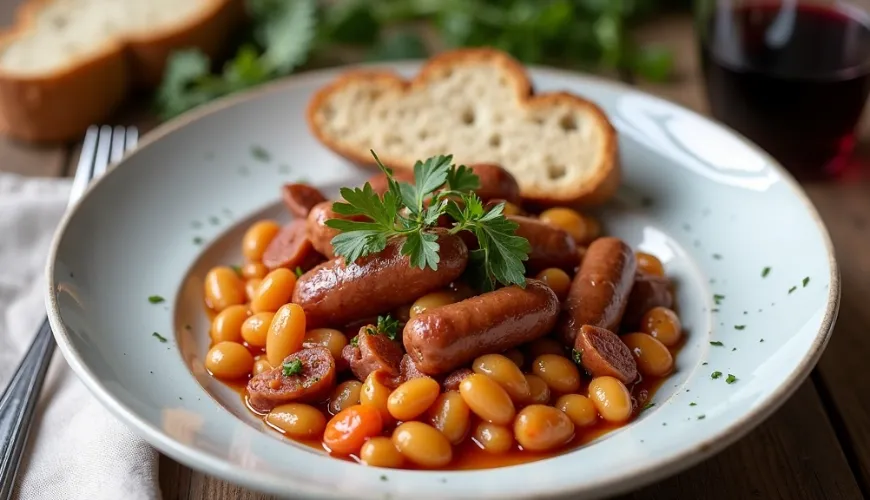
Breton Beans - The Taste of France on a Czech Plate
In the heart of western France, in a region called Brittany, a recipe was created that is now cooked from Paris to Prague. Breton Beans, a hearty, fragrant, and perfectly warming dish, have become popular not only among lovers of French cuisine but also among those seeking a simple and honest dinner. The foundation is white beans, a tomato base, and often sausage or smoked meat, adding richness and depth to the dish. It may surprise you that this dish is closer to Czech goulash than to fine haute cuisine – and that's precisely why it feels so familiar to us.
A dish that smells of home and distant places. Perhaps you encountered it during a holiday in France, or maybe you were intrigued by a can labeled Cassoulet on the shelf of a specialty store. In any case, it's time to take a closer look at Breton beans and their recipes – along with practical tips on how to prepare them at home and why they can be an interesting part of a healthy and sustainable diet.
What Exactly Are Breton Beans?
Originally, it was a dish of the poor. Farmers in Brittany mainly had access to legumes, garden vegetables, and meat only occasionally – if at all. Today, however, Breton beans are prepared as a hearty dish, often complemented by smoked meat, sausage, or bacon, and their form varies slightly in different regions. But don't confuse them with the cassoulet from the Languedoc region, which is even heartier and contains more types of meat.
The basic recipe typically includes:
- white beans (often large butter beans),
- onion, garlic, and tomato paste or crushed tomatoes,
- herbs like thyme or bay leaf,
- and meat – from sausage to smoked to duck leg in more luxurious versions.
It's a dish that matures over time. If you let it rest until the next day, it tastes even better. Just like Czech goulash or French ratatouille.
Traditional and Modern Versions
Finding a recipe for Breton beans is not difficult. But finding one that tastes just like in a Breton pub requires a bit of practice. The key is slow cooking and quality ingredients – ideally dry white beans that you soak yourself in advance, and homemade sausage or a piece of smoked meat, preferably with a bone. This way, the maximum flavor is released into the sauce.
But not everyone has the time or inclination to spend hours in the kitchen. That's why simplified recipes have emerged – for example, Breton beans from a can, which can be heated in a few minutes. Ideally, the can should only contain real ingredients – beans, tomatoes, a piece of meat, spices. Today, you can even find organic versions or vegetarian versions where meat is replaced by smoked tofu or tempeh.
One practical trick for a quick version at home is to use canned beans, ideally without added salt, and complement them with fried sausage and a tomato sauce with garlic. Within half an hour, you'll have a dish on the table that tastes like it's from the French countryside.
Breton Beans with Sausage or Smoked Meat? It Depends on Your Mood
One of the biggest advantages of this dish is its versatility. If you're in the mood for something richer and more filling, Breton beans with sausage won't disappoint. Choose carefully – ideally a local, honest sausage without preservatives and additives. Fry a few slices until golden, add them to the beans, and let them warm through for a while.
Conversely, Breton beans with smoked meat, like pork neck or smoked ribs, bring a smoky depth and flavor that complements the gentleness of the beans beautifully. You can cook the smoked meat separately and then mix it into the sauce, or stew it directly with the beans so that the flavors meld beautifully.
One family in France, with whom I once stayed during a student exchange, always prepared their Haricots à la Bretonne with homemade sausage marinated in red wine and garlic before cooking. The resulting flavor was so intense that we didn't even need bread with the meal.
A Healthier and More Sustainable Classic Alternative
In a time when many people are trying to reduce meat consumption or seek more sustainable ways of eating, Breton beans are surprisingly relevant. Legumes as a source of protein, fiber, and minerals offer a nutritious base that can easily replace animal products without losing flavor.
At the same time, the preparation of beans, tomatoes, and spices is a great example of how to cook sustainably and without unnecessary waste. If you buy dried beans in bulk, complement them with seasonal vegetables, and perhaps use leftover smoked meat from the fridge, you get an affordable and environmentally friendly meal.
And if you want to go even further – choose organic ingredients, preferably of local origin. Today, there are even Czech farms that grow legumes suitable for organic farming. Sustainable cuisine doesn't just mean plant-based food, but especially thinking about the origin and processing of food.
What to Serve with It? Simplicity Wins
Breton beans are so filling that you usually only need a slice of sourdough bread with them. But you can also add boiled potatoes, or – for a more festive version – sprinkle the dish with fresh herbs and accompany it with a glass of red wine. And if you have any leftovers, feel free to bake the beans the next day in the oven with a little breadcrumbs and cheese. They taste even better the next day.
French chef Raymond Blanc once said: "Truly good food is not about luxury, but about the care you give it." And that's the essence of Breton beans – simplicity that creates something extraordinary.
Whether you choose a recipe with sausage, with smoked meat, or just with tomatoes and herbs, Breton beans are proof that traditional dishes have their place in modern cuisine. They are hearty, nutritious, easily adaptable, and above all – they taste so good that you'll look forward to them again and again.