

How to Permanently Straighten Hair Without Unnecessary Risks
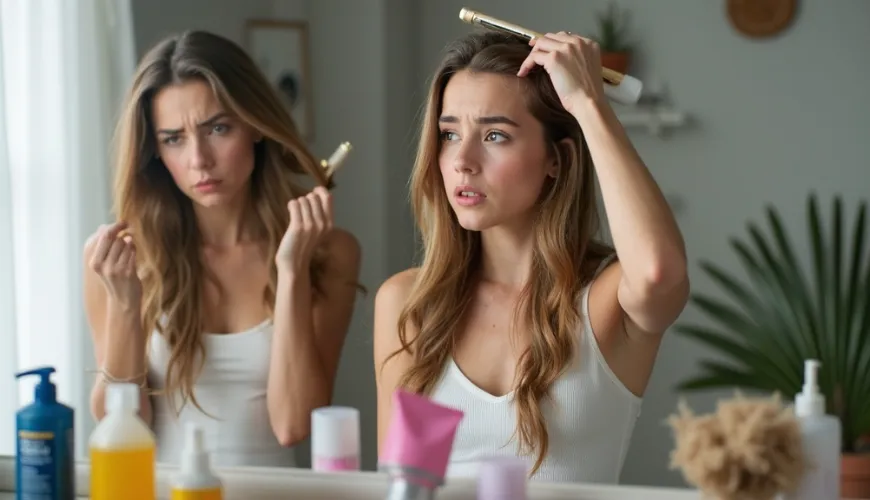
Everything You Should Know Before Opting for Permanent Hair Straightening
The desire for straight, smooth, and easily manageable hair is strong for many women and men—especially if daily battles with frizz, volume in the wrong places, or unruly curls take more time than one would like to spend in front of the mirror. This is where permanent hair straightening comes into play, often referred to as chemical or Japanese straightening. While the result can initially be fascinating, it's important to look at the overall picture: how this procedure works, what it entails, its pros and cons, and why it is so frequently discussed across internet forums.
What Exactly Does Permanent Hair Straightening Mean?
Permanent hair straightening is a cosmetic procedure that chemically alters the structure of the hair fiber so that the hair remains straight—even after washing. In practice, this means that the effect lasts for several months, sometimes up to half a year, depending on hair type and the method used. It's not just ironing the hair, which temporarily smooths it mechanically. Here, a permanent change is achieved—similar to a permanent wave, just with the opposite result.
There are several methods to perform permanent straightening, but the most attention is drawn to the so-called Japanese hair straightening—a technique that originated in the 1990s in Tokyo and quickly became a global trend. Its greatest advantage is that it leaves hair not only straight but also shiny and soft to the touch.
Unlike regular hair ironing, this is not a temporary effect. In the Japanese method, disulfide bonds in the hair's keratin are broken and rearranged, allowing the hair to "remember" the new straight structure. This process, however, requires experienced hands—and precise adherence to timing and concentration of products.
Can You Do Permanent Hair Straightening at Home?
Those interested in DIY care often ask whether it's possible to perform permanent hair straightening at home. Various at-home straightening kits are available in stores, promising easy use and salon-quality results without the need for a salon visit. Although it's tempting to save money and avoid long appointments, using such strong chemical products at home carries significant risks.
Chemical straightening is a process demanding not only precision but also the ability to gauge hair type hair. Every hair reacts differently—what helps one type achieve a smooth effect may lead to damage, breakage, or even hair loss in another. A common mistake in at-home straightening is incorrect timing or using the product on already colored or lightened hair. The result can be severe damage, taking months to repair.
A common practice example: a young woman bought a home straightening kit, thinking her slightly wavy, never-dyed hair would be fine. She applied the product exactly as instructed but overlooked the fact that her hair was weakened by the sun and sea water after returning from vacation. After the application, her hair began breaking even during washing—resulting in fragility and the need for a drastic cut instead of the desired smoothness.
Try our natural products


What Do Discussions and Reviews Say?
Searching for "permanent hair straightening – discussions" online reveals hundreds of posts and comments in forums, Facebook groups, and on YouTube. While some women cannot praise the technique enough—especially if entrusted to an experienced hairdresser—others describe their experience as "the biggest hair care mistake."
Interestingly, often dissatisfied reviews come from those who decided to perform the procedure at home or with an inexperienced hairdresser. In contrast, salon services where the technique is performed by certified experts tend to have significantly better ratings. Long-lasting results, easy maintenance, and noticeable improvement in hair appearance are usually mentioned.
According to comments on the popular cosmetic forum eMimino.cz, Japanese straightening is especially recommended for women with thick, strong, and naturally wavy hair. For finer types, more caution is necessary. Quoting one user: “I always had lion-like hair—volume and curls with no order. After Japanese straightening in a salon, I finally have peace in the morning. Just brush and go.”
What Are the Alternatives and Possible Complications?
Hair straightening is attractive, but any intervention into their structure carries risks. Chemical products used in permanent straightening contain active ingredients like sodium hydroxide, ammonium thioglycolate, or formaldehyde—some of which can be irritating to the skin or respiratory system, especially if applied improperly. Moreover, hair after permanent straightening requires intense care—hydration, regenerative masks, and avoiding further chemical treatments.
For those who don't want to undergo permanent changes, keratin straightening is a gentler option that lasts several weeks. Hair remains temporarily straight, but without affecting its internal structure. This type of straightening is also popular among vegan and environmentally conscious clients, as plant-based products without harmful chemicals are available.
On ecological blogs, like Treehugger.com, it is often pointed out that permanent straightening is chemically demanding not only for the hair but also for the environment. Products with formaldehyde are particularly problematic, so it's recommended to search for brands that avoid these substances or offer natural alternatives.
When to Avoid Permanent Straightening?
The decision for permanent hair straightening should not be impulsive. If hair is freshly colored, weakened after the winter, or exposed to sun and saltwater, it is better to postpone the procedure. The same applies to pregnant and breastfeeding women—some chemicals are not suitable during this period.
Also, people who frequently change hairstyles or colors should consider whether they really want a change that is—at least for several months—irreversible. New growths will have their natural structure, which can appear uneven and require additional adjustments.
Similarly, it's wise not to underestimate consultation with a specialist. A hairdresser experienced with the technique can assess whether the hair is ready for the procedure. Sometimes they may recommend another procedure or wait until the hair quality improves.
Permanent hair straightening remains a controversial topic even after years—not only because of its chemical composition but mainly because of differing expectations. For some, it's a relief; for others, a disappointment. The key to satisfaction is being informed: knowing what to expect from the procedure, how to care for the hair, and whom to entrust it to.
The desire for perfect hair is natural, but it's always good to ask: Is a temporary solution enough, or do I want to undergo a procedure that commits me for a longer period? The answer can determine not only the appearance of your hair but also its health.