

Castoreum: What We Don't Know About This Natural Substance
What is Castoreum and Why is it Talked About More Than You'd Expect?
When you hear the term "natural aroma," most people think of vanilla, citrus, or perhaps lavender. Few would guess that one of these aromas could be a substance called castoreum, which comes from the body of a beaver. Yes, you read that right – a beaver. And while it sounds like the beginning of a bizarre story, the truth is stranger than fiction.
Castoreum: What Exactly Is It?
Castoreum is an oily, strongly scented substance secreted by beavers from so-called castor sacs, located near their anal glands. Along with urine, they use it to mark their territory. In nature, it serves a completely practical function – keeping other beavers at a respectful distance and protecting their domain. For humans, however, this substance has quite different uses.
In the past, castoreum was commonly used in perfumery, medicine, and even as an additive in foods – especially as part of the flavoring for vanilla or raspberry flavors. In the USA, for example, it was officially listed as a natural ingredient in food and beverage production. This fact reignited fears and fascination among people when reports began to spread about it being "secretly" used in some candies or ice creams.
And what's the truth behind it?
Castoreum in Food? Theoretically Yes, Practically Almost No
The public reaction to the discovery that beaver castoreum is (or was) part of some foods was understandably mixed. For most people, the idea of eating something originating from the body of a wild animal – especially from such an intimate part – is at least unappetizing. However, it is a fact that castoreum was indeed approved as a food additive.
The US Food and Drug Administration (FDA), for instance, long listed it as safe to consume in small quantities, labeled as "natural flavoring." In the European Union, its use in food production is legally permitted, but for regular use, it is extremely impractical and expensive.
And here's the key to the whole mystery: obtaining castoreum is not simple. It requires the beaver to be captured (or killed), the substance extracted, and then processed. Given environmental protection, ethical issues, and costs, castoreum is hardly used today – certainly not in mass food production. Most manufacturers have switched to synthetically created alternatives that are cheaper, more ethical, and more readily available.
But that doesn't mean castoreum has completely disappeared.
Where Is Castoreum Still Used Today?
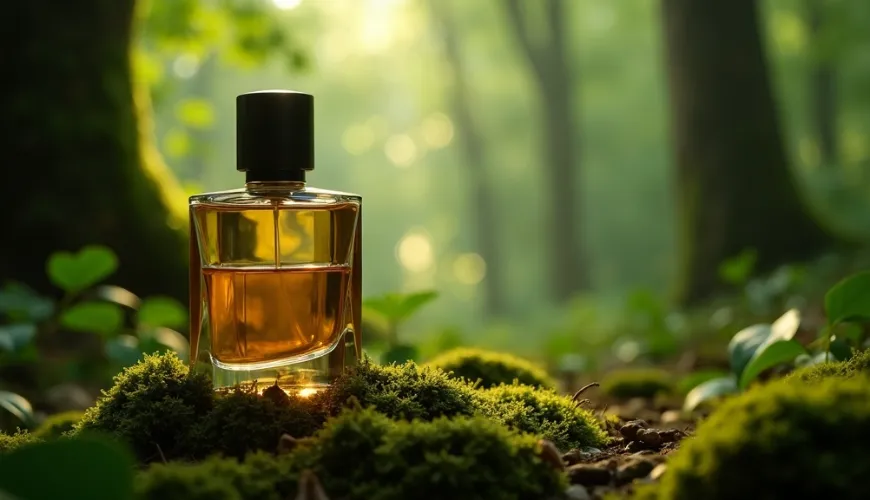
Today, castoreum is found more in luxury perfumery, where it is valued for its deep, earthy, musky tone. This fragrance adds a subtle, sensual base to certain perfumes, reminiscent of leather, forest moss, or even tobacco. Perfumers use it very sparingly – often just as a component in the so-called base notes of a composition.
In classic perfumes like Chanel's Cuir de Russie or in older versions of Guerlain perfumes, castoreum was one of the characteristic ingredients. Today, however, even in this industry, it is mostly replaced by synthetic substitutes that can mimic its aromatic profile without the need for animal origins.
In medicine, castoreum has almost no use anymore, although historically, it was used to treat headaches, hysteria, or epilepsy. In folk medicine, it had a reputation as a sort of panacea – which likely also contributed to beavers becoming nearly extinct in some regions.
The Myth That Persists
Although castoreum is hardly used in the food industry today, the myth of its presence in candies or ice cream continues to spread. It often appears in articles like "10 Things You Eat and Don't Know What's Really in Them," or as clickbait sensationalism on social media. Like many other similar stories, however, it is based on a truth that no longer corresponds to reality.
One of the main reasons castoreum hasn't made it into the broader food industry is its low availability. Obtaining a natural substance from beavers is not only challenging but also restricted by animal protection laws. The modern industry simply focuses on efficiency – and castoreum doesn't fit into this equation.
A Case in Practice - A Perfume That Smells Like a Forest
In 2017, an independent perfume brand from Canada launched a fragrance inspired by the forested landscapes of North America. The perfume was meant to evoke the scent of moss, pine needles, wood after rain, and also... beaver. The manufacturer decided to use actual castoreum, which was listed in the ingredients. Customer reactions were mixed – some were fascinated by the authenticity and natural character of the composition, while others reacted with disgust. Nonetheless, the perfume became a curiosity and an attraction for perfume enthusiasts seeking unusual and historically faithful scents.
This example shows how even today, a substance as ancient as castoreum can captivate a modern audience – if used with respect and awareness.
Ethics vs. Tradition
The discussion around castoreum often touches on a broader topic – namely, the ethical use of animal products in cosmetics and food. Just like with musk, lanolin, or carmine (a dye from cochineal insects), the question is posed: do we still need it?
In an era when we have sophisticated synthetic alternatives that are cheaper, sustainable, and ethically sound, more and more companies are choosing to go the cruelty-free production route. Castoreum thus becomes more of a relic from the past rather than an active component of modern industry.
And yet, for some, it can still be a symbol of traditional craftsmanship, the scent of old times, and proof of how uniquely and sometimes unexpectedly nature can inspire human creativity.
As perfumer Mandy Aftel, known for her work with natural materials, says:
"Natural scents have a story – and stories touch the soul."
And such is the story of castoreum: a story that winds from beaver dams to an elegant bottle on the shelf in a perfumery.