
# Why Women Lack Iron and How to Change It

Every other woman of working age struggles with lower iron stores than would be healthy. This is not just a statistic taken out of context – it is a reality confirmed by World Health Organization data and routine clinical practice. Yet surprisingly little is said about iron deficiency, and when it is mentioned, it usually involves iron salt tablets, which cause digestive problems for many women. There are, however, ways to replenish iron stores more gently and naturally. And most importantly – there are ways to prevent the problem before it manifests as fatigue that makes it impossible to function normally.
Try our natural products
Why adequate iron is so essential for women
Iron is a mineral without which the body literally cannot breathe. It is a key component of hemoglobin – a protein in red blood cells that carries oxygen from the lungs to every cell in the body. When iron levels drop, cells receive less oxygen, and the body begins conserving energy where it notices first – in concentration, physical performance, and mood. According to information from the National Institutes of Health (NIH), women of reproductive age need approximately 18 milligrams of iron per day, while men need only 8 milligrams. This difference is no coincidence.
The main reason is menstruation. Every month, a woman loses a significant amount of iron along with blood, and if these losses are not compensated through diet or other sources, stores gradually diminish. For women with heavier periods, athletes, or those following long-term restrictive diets, the risk is even higher. Pregnancy and breastfeeding then increase iron demands dramatically – the body needs to supply not only itself but also the growing fetus, and later produce nutrient-rich milk. It is therefore no surprise that iron deficiency is the most common nutritional deficiency worldwide and that women constitute its most vulnerable group.
What surprises many women is the fact that iron plays a role not only in oxygen transport. It contributes to proper immune system function, the production of neurotransmitters affecting mood and cognitive performance, the health of hair, nails, and skin, and even the regulation of body temperature. When someone complains of constantly cold hands and feet, hair loss, and a feeling that the brain is working "through fog," few people connect all these symptoms together. And yet they may have one common denominator.
This is precisely where we arrive at a question that troubles a surprisingly large number of women: how do you actually recognize that the body is lacking iron when the symptoms resemble a dozen other conditions?
Fatigue is the most common and at the same time the least specific signal. Almost everyone is tired sometimes – from work, poor sleep, or stress. But fatigue from iron deficiency has a different quality. It is deep, does not go away after a weekend of rest, and is often accompanied by shortness of breath during everyday activities, such as walking up stairs or carrying groceries. Added to this are paler mucous membranes (it is enough to look at the inside of the lower eyelid – if it is noticeably light instead of a rich pink, this may be a clue), brittle nails, sometimes with characteristic longitudinal ridges, and increased susceptibility to infections.
A lesser-known symptom is so-called restless legs syndrome – an unpleasant sensation in the lower limbs that compels a person to constantly change position, especially in the evening and at night. Studies published in the journal Sleep Medicine Reviews confirm the connection between low ferritin levels (the storage form of iron) and this syndrome. Another surprising signal may be an unusual craving for ice, starch, or even clay – a condition known as pica, which doctors observe precisely in cases of significant iron deficiency.
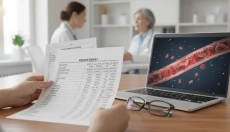
The practical experience of a Czech doctor, which she shared at a professional conference on women's nutrition, illustrates the problem very vividly. A thirty-five-year-old patient came in with chronic fatigue, which she attributed to demanding work and caring for two small children. Her general practitioner measured her blood count, which came back normal, and sent the patient home with a recommendation to rest more. Only when the woman made an appointment with a specialist, who ordered a test for ferritin levels – the body's iron storage – did it turn out that her values were far below optimal. A blood count only reveals anemia at an advanced stage, while ferritin reveals the problem much earlier. This information is crucial: when iron deficiency is suspected, it is important to request not only a routine blood count but specifically a ferritin test, ideally in combination with transferrin and transferrin saturation values.
How to address iron deficiency other than with tablets
Classic iron tablets – most commonly ferrous sulfate – are effective in many cases but have their downside. A significant proportion of women tolerate them poorly: constipation, nausea, abdominal pain, and dark discoloration of stool are such common side effects that many patients discontinue treatment prematurely. Fortunately, alternative approaches exist that can be gentler on the digestive tract while still being sufficiently effective, especially for mild to moderate deficiency.
The foundation is dietary adjustment with an emphasis on sources of well-absorbable iron. Iron in foods exists in two forms: heme and non-heme. Heme iron, found in animal sources such as red meat, liver, dark poultry meat, and seafood, is absorbed significantly better – its bioavailability reaches 15 to 35 percent. Non-heme iron from plant sources, such as legumes, tofu, spinach, pumpkin seeds, or whole grains, is absorbed less efficiently, in the range of 2 to 20 percent, but its absorption can be significantly increased with simple tricks.
The most effective trick is combining plant sources of iron with vitamin C. It is enough to add a slice of lemon to a bowl of lentil soup, a few strawberries to oatmeal, or bell pepper to a spinach salad. Vitamin C can increase non-heme iron absorption up to sixfold, as demonstrated by research published in the American Journal of Clinical Nutrition. Conversely, it is good to know what slows iron absorption – coffee and tea contain tannins that significantly reduce iron absorption, and the same applies to calcium-rich foods if consumed at the same time as iron sources. This does not mean one must give up coffee, but it pays to drink it at least an hour apart from iron-rich meals.
For women seeking an alternative to classic tablets, the market today offers a range of gentler forms. Chelated forms of iron, such as iron bisglycinate, are bound to amino acids, which means they are absorbed through a different mechanism than common iron salts and cause significantly fewer digestive issues. Liquid forms of iron, for example based on ferrous gluconate, also tend to be better tolerated. There are also products based on natural iron from curry leaves or iron-enriched acerola, which may suit women who prefer the most natural approach possible.
As nutritional therapist and author of books on women's nutrition Lily Nichols once aptly summarized: "Iron isn't just about what you eat – it's about what your body can actually use from food." And that is precisely where the key to success lies. Even a perfectly designed meal plan can fail if digestion is impaired – for example, in cases of celiac disease, chronic inflammatory bowel diseases, or infection with the bacterium Helicobacter pylori, which is surprisingly one of the common hidden causes of iron deficiency.
Food fermentation is another tool that deserves attention. Traditional practices such as soaking legumes, fermenting vegetables, or preparing sourdough bread reduce the content of phytic acid, which otherwise blocks iron absorption. This is no trendy novelty – these are practices hundreds of years old that our ancestors used intuitively and that modern science is only now fully appreciating. For example, soaking lentils overnight and then thoroughly rinsing them can reduce phytate content by 50 to 70 percent, making the iron from legumes substantially more available.
A specific chapter is cooking in cast iron cookware. It may sound like an old wives' tale, but research, including a study published in the Journal of the American Dietetic Association, confirms that cooking acidic foods in a cast iron pan (such as tomato sauce) actually increases the iron content of the finished dish. A similar principle is behind the so-called "Lucky Iron Fish" – a small cast iron tool in the shape of a fish that is added to the pot during cooking and gradually releases iron into the food. It was originally developed for developing countries but is gaining popularity in Europe as well.
It is also important to mention that not every iron deficiency can be resolved through diet alone. If ferritin values are very low, if a woman suffers from heavy menstrual bleeding, or if the cause is poor absorption due to intestinal disease, medical supervision is essential. In such cases, intravenous iron administration may be appropriate, bypassing the digestive tract and replenishing stores quickly and effectively. This approach has become more accessible in recent years even in routine outpatient practice, and for many women it represents a true turning point – after months of futilely swallowing tablets that made them feel unwell, they finally experience relief.
Prevention is nevertheless always easier than treatment. Regular monitoring of blood values – ideally once a year, and more frequently for women with risk factors – makes it possible to detect declining iron stores before full-blown anemia develops. A conscious approach to diet that takes into account not only the iron content of foods but also factors affecting its absorption can make an enormous difference. And finally, listening to your own body – noticing persistent fatigue, changes in nails, unusual pallor, or worsening concentration – is the first step toward not putting off the problem.
Iron is a quiet player in the orchestra of bodily functions. It is not as media-sexy as omega-3 fatty acids or probiotics, and it does not receive as much attention as vitamin D. But for millions of women around the world, iron is precisely the element whose deficiency steals their energy, clarity of thought, and joy from everyday life day after day. The good news is that solutions exist – and they do not always have to begin and end at the medicine cabinet with tablets.