

We'll advise you on how to replace meat in Czech cuisine
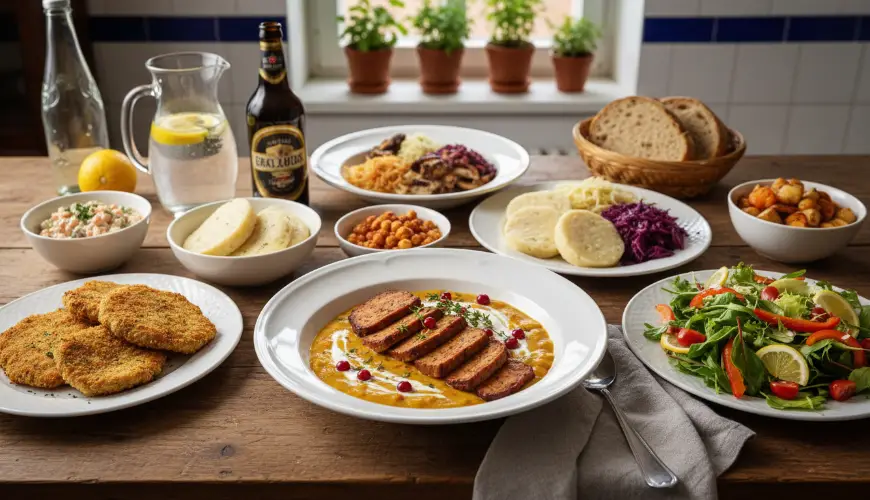
When you mention Czech cuisine, most people think of svíčková, vepřo-knedlo-zelo (roast pork with dumplings and sauerkraut), or schnitzel. These are dishes that hold a firm place in domestic gastronomy, ones we associate with Sunday lunches at grandma's, family celebrations, and the feeling of home. But more and more Czechs today are thinking about whether it might be wise to reduce the portion of meat on their plate – whether for health reasons, the environment, or simply because they're curious about how else food can taste. And this is precisely where a question arises that puts many people off before they even begin: how do you replace meat in Czech cuisine so that the family doesn't notice?
It's not as unrealistic as it might seem. The key lies in understanding what meat actually does in a dish – it provides texture, satiety, umami flavor, and the feeling of having had a "proper meal." If we can replicate these qualities with other ingredients, the result can be surprisingly close to the original. And it doesn't have to mean the family becomes vegan. Just one or two days a week when something different appears on the plate, and the difference in overall impact on health and the planet is measurable.
Try our natural products


Why even consider reducing meat
There are plenty of reasons, and everyone can find their own. From a health perspective, the situation is fairly clear. Excessive consumption of red and processed meat is, according to the World Health Organization, associated with a higher risk of cardiovascular disease, type 2 diabetes, and certain types of cancer. The Czech Republic has long been among the countries with the highest meat consumption per capita in Europe – according to data from the Czech Statistical Office, we consume around 80 kilograms per person per year, which is significantly above the average recommended by nutritional experts.
Then there's the ecological dimension. Animal agriculture is one of the main contributors to greenhouse emissions, consumes enormous amounts of water, and takes up vast areas of land. The organization Our World in Data offers clear data showing how dramatic the difference in environmental footprint is between a kilogram of beef and a kilogram of legumes. You don't need to be an environmental activist for these numbers to make you think.
And finally, there's the financial aspect. Quality meat from organic farming costs a considerable amount of money. Legumes, mushrooms, tofu, or tempeh are significantly cheaper and, when prepared correctly, offer comparable nutritional value. For families on a limited budget, partially replacing meat can be a way to save money while eating a more varied diet.
Of course, the point isn't to completely demonize meat. As leading Czech nutritional therapist Petr Havlíček once noted: "It's not about banning meat, but learning to treat it as a delicacy, not as the foundation of every meal." This very approach – less meat, but of higher quality, supplemented with plant-based alternatives – is proving to be the most sustainable path for most households.
Before we dive into specific tips and recipes, it's worth clarifying what best replaces meat so that the body gets all the necessary nutrients. The biggest concern is usually protein, but it's actually quite easily available from plant sources. Legumes – lentils, chickpeas, beans, peas – contain around 20–25 grams of protein per 100 grams of dry weight, which is comparable to meat. Tofu and tempeh, made from soy, are another excellent source. Mushrooms may not have as high a protein content, but their texture and ability to absorb flavors make them an ideal substitute in dishes where meat plays more of a flavor-carrying role than a primary protein source.
It's important to think about amino acid combinations. While meat contains all essential amino acids at once, plant sources typically offer them in an incomplete profile. The solution is simple – just combine different sources throughout the day, for example legumes with grains. The classic Czech pea soup with bread is exactly such a combination, without our ancestors even realizing it. The body assembles the amino acids on its own; they don't need to be consumed in a single meal.
Other nutrients to watch out for are iron, zinc, and vitamin B12. Iron from plant sources is absorbed less efficiently than from meat, but its absorption is significantly enhanced by vitamin C – just add a pepper salad, a few drops of lemon juice, or tomato sauce to the meal. Vitamin B12 is practically absent in plant-based diets, but if you're only reducing meat rather than eliminating it entirely, you don't need to worry too much about your levels. With significant restriction, it's wise to consider supplementation or consumption of fortified foods.
But now let's move on to what interests most people the most – how specifically to incorporate these ingredients into traditional Czech recipes without the family protesting.
Tips and recipes for meatless Czech cuisine
Let's start with the most classic of all – svíčková. Yes, even svíčková can be prepared without meat, and the result can surprise even the most stubborn carnivores. Instead of beef sirloin, celeriac works excellently as the base – specifically a whole celeriac root, roasted in the oven until golden and then braised in the classic svíčková sauce. The sauce is prepared exactly the same way as the traditional version – with root vegetables, onion, mustard, cream, and cranberries. It's the sauce, after all, that makes svíčková what it is, and the celeriac develops a delicate, buttery texture within it that works surprisingly well. Bread dumplings, of course, remain the same.
Practical experience from one Prague household confirms this. Markéta, a mother of two school-age children, started cooking meatless versions of classic dishes once a week. "The first week I made lentil bolognese and the kids didn't notice the difference at all. The sauce had the same consistency, the same flavor from tomatoes and spices. It wasn't until I told them that they looked surprised," she describes. The key, according to her, was not making a big deal out of it and not presenting the food as something special or diet-related. It was simply lunch like any other.
And lentil bolognese is another great example. Brown or green lentils, when cooked al dente and sautéed in a pan with onion, garlic, tomato paste, and Italian seasoning, have an almost identical texture to ground meat. It's served with pasta or – in the Czech version – with bread dumplings and grated cheese. Those who want to bring the texture even closer to meat can mix the lentils with finely chopped button mushrooms, which give the dish a meatier character and a pronounced umami flavor.
Mushroom goulash is another classic that doesn't need any major modifications. A mix of wild mushrooms or button mushrooms with onion, paprika, caraway, and marjoram creates a goulash that is hearty, fragrant, and perfectly Czech. Mushrooms naturally have a high glutamate content – the substance responsible for umami flavor – so the resulting dish feels rich and satisfying. Served with bread or dumplings, even an experienced eater might not distinguish it from the meat version on the first taste.
Schnitzel is sacred to many Czechs, but even here there are alternatives worth trying. Celeriac schnitzel – slices of celeriac coated in the traditional triple breading and fried in oil – is a vegetarian cuisine classic that has a longer tradition in the Czech Republic than many would think. It's important to briefly parboil the celeriac first so it's soft but not overcooked. After coating and frying, it develops a crispy crust and a delicate, slightly nutty interior. Another variant is cauliflower schnitzel, where whole slices of cauliflower are breaded and fried the same way. They're served with potato salad, just like their meaty counterpart.
For those looking for quick solutions for weekdays, great choices include bean chilli with baked bread, chickpea patties, or buckwheat "meatloaf" slices seasoned with soy sauce and herbs. All of these dishes can be prepared in under thirty minutes and offer enough protein and fiber to leave the family satisfied when they leave the table.
A few practical tips to help with the transition:
- Start slowly – one meatless day per week is a great beginning that won't scare anyone.
- Use familiar flavors – caraway, marjoram, garlic, paprika, and onion are the spices that define Czech cuisine, and they work just as well with legumes as with meat.
- Don't be afraid of fat – a bit of quality butter or olive oil gives plant-based dishes richness and the feeling of a "proper meal."
- Experiment with texture – combining legumes, mushrooms, and vegetables creates a multi-layered dish that doesn't look sparse on the plate.
- Don't present the food as a substitute – instead of "today we have lentils instead of meat," try simply "today it's lentil goulash" without further comment.
The last point is perhaps the most important. The psychology of food plays an enormous role. As soon as someone hears the word "substitute" or "alternative," they automatically expect it to be worse than the original. But when you simply serve the dish as another one of the many meals in your repertoire, the chances of success rise dramatically.
Interestingly, Czech culinary tradition actually has strong meatless roots. Historically, meat was a luxury that an ordinary household couldn't afford every day. Bramboračka (potato soup), kulajda (creamy mushroom and dill soup), mushroom sauce with dumplings, fried cauliflower, curd dumplings – these are all dishes that belong to the golden treasury of Czech cuisine and need no meat whatsoever. In a sense, this isn't a revolution but a return to roots.
Those who want to go even further can explore the world of fermented soy products. Tempeh, originally from Indonesia, has a distinctive nutty flavor and firm texture that, after marinating and pan-frying, resembles meat more than anything else in the plant kingdom. Marinated in soy sauce, honey, and garlic, then grilled or baked in the oven, it becomes a surprisingly versatile ingredient that works in goulashes, on sandwiches, and as a main course with a side dish. Tempeh is widely available in Czech stores today, including in organic quality offered by specialized health food e-shops, for example.
It's also worth mentioning seitan, or wheat gluten, which of all plant-based alternatives has the closest texture to meat. For people without gluten intolerance, seitan is an excellent choice for dishes like Znojmo-style goulash or braised meat with vegetables. It can be bought ready-made or prepared at home from wheat flour, although homemade preparation requires a bit of patience.
Replacing meat in Czech cuisine is therefore definitely not about deprivation or compromises. It's more about broadening horizons and discovering new flavors within a tradition we all know and love. And who knows – perhaps meatless svíčková or lentil goulash will become new family classics that your children will one day remember just as fondly as you remember Sunday lunches at grandma's.